Last updated November 22, 2026
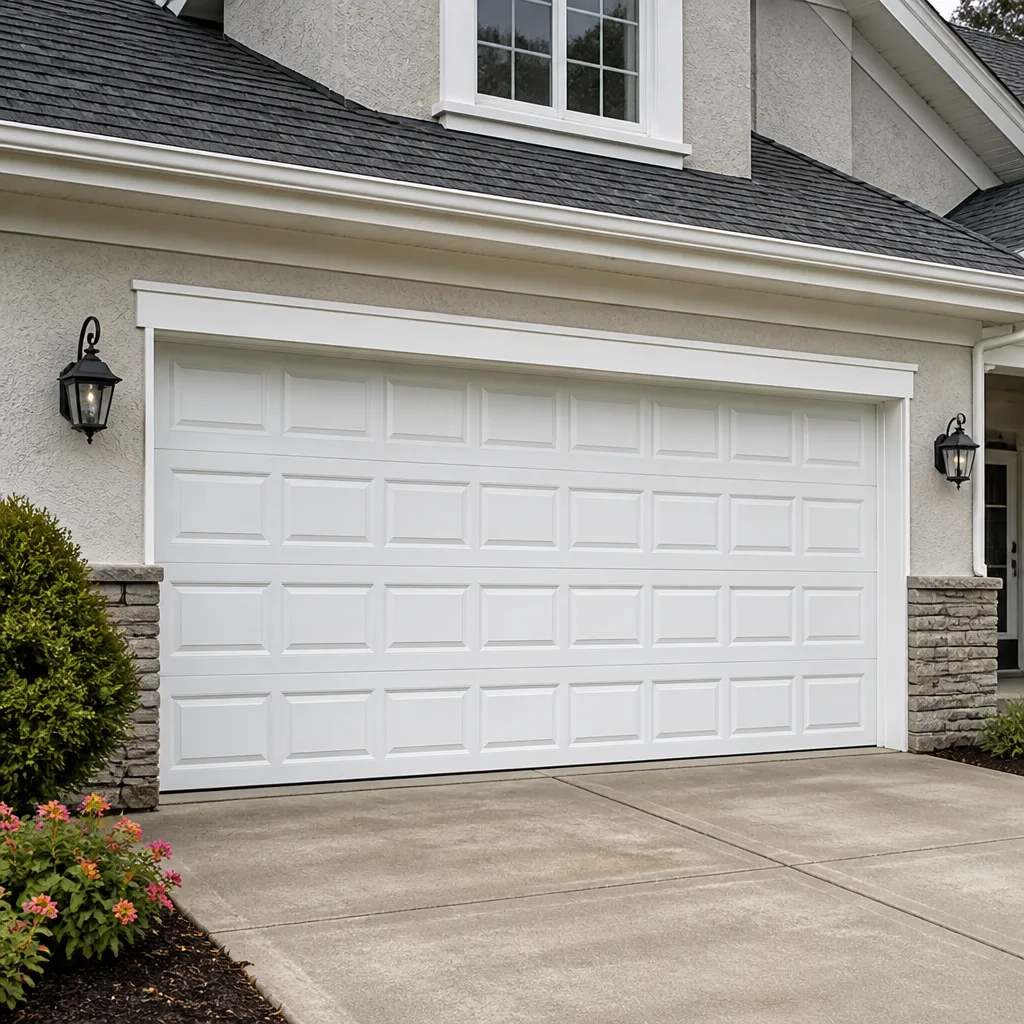 Raised-panel steel
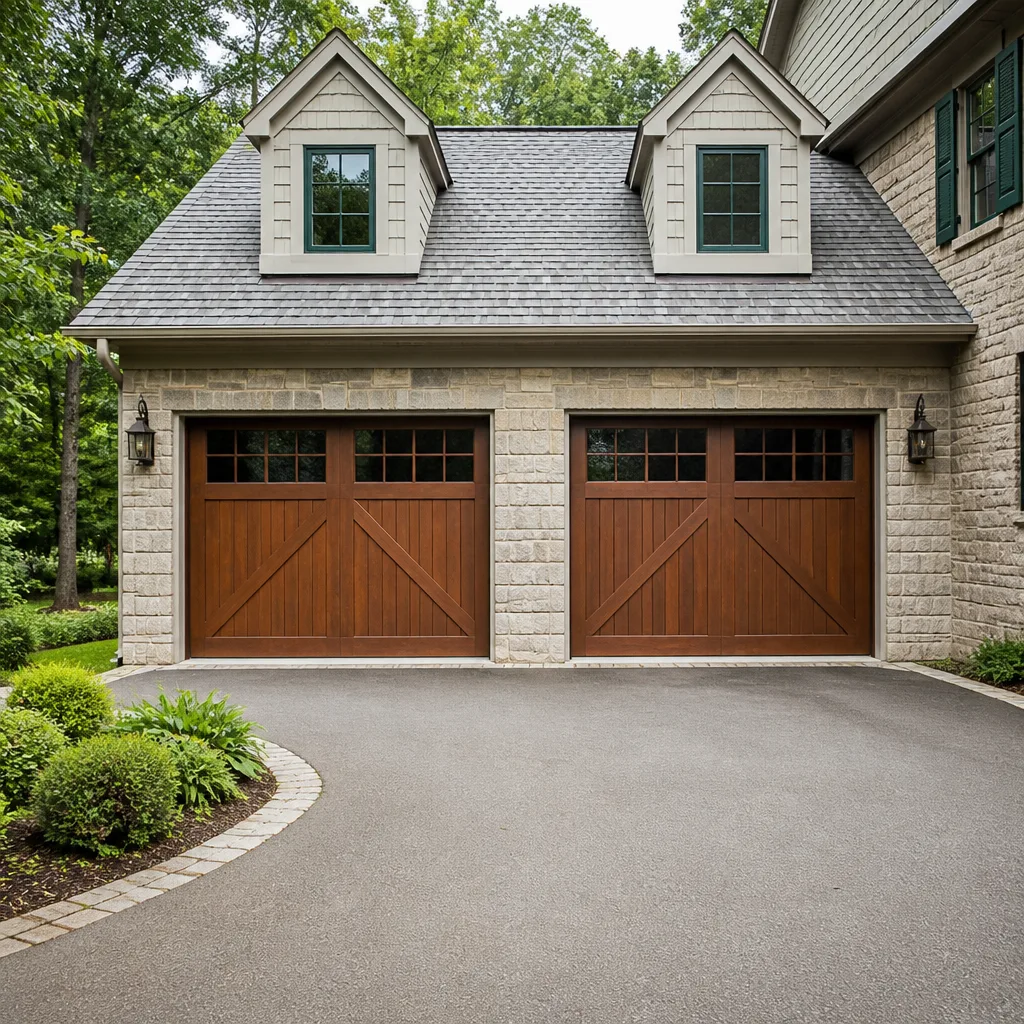 Carriage house
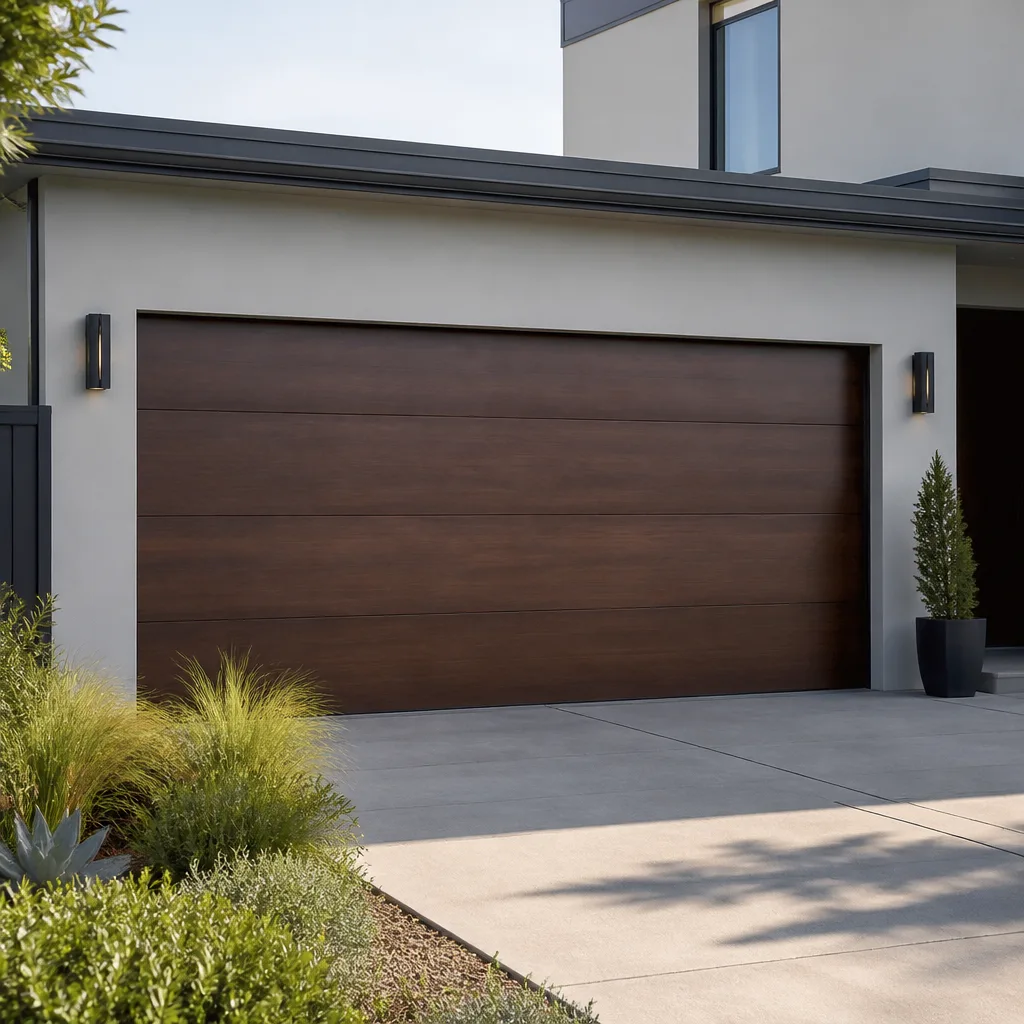 Modern flush
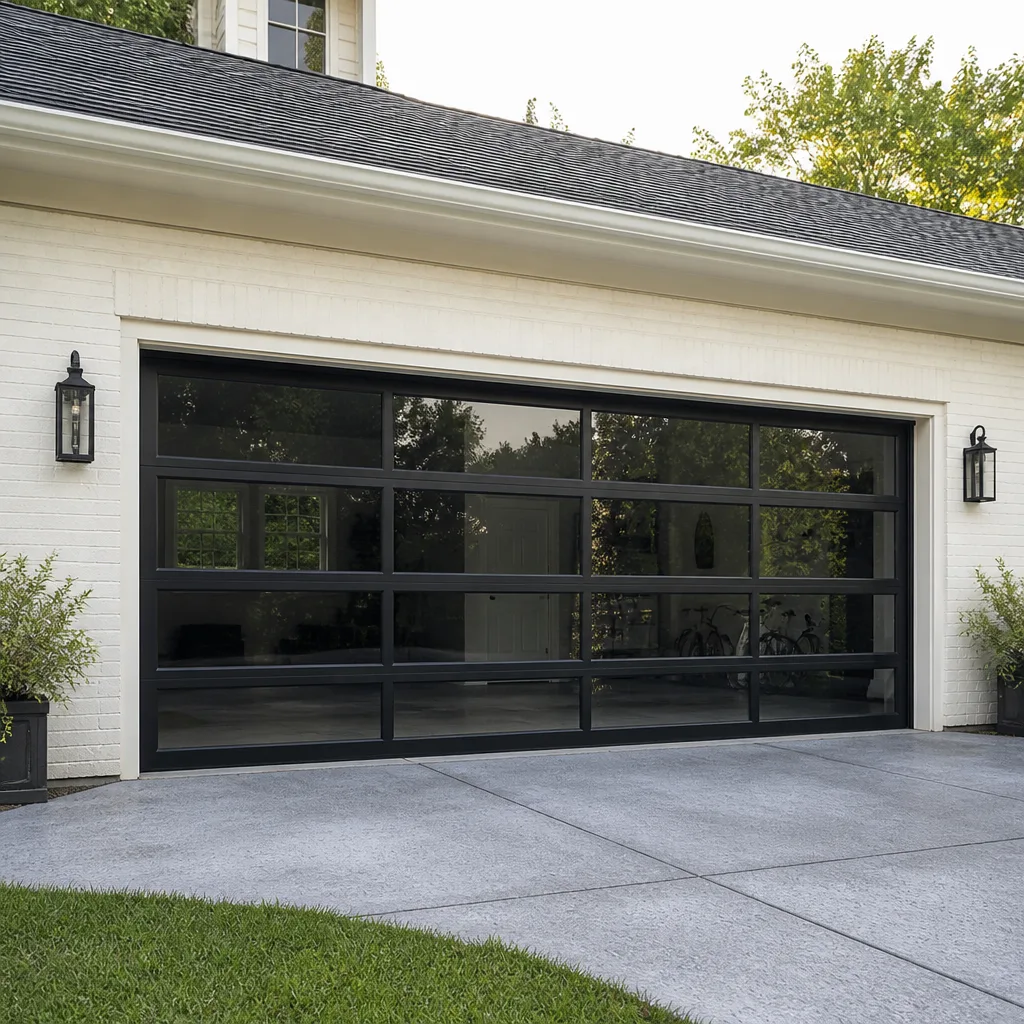 Full-view glass
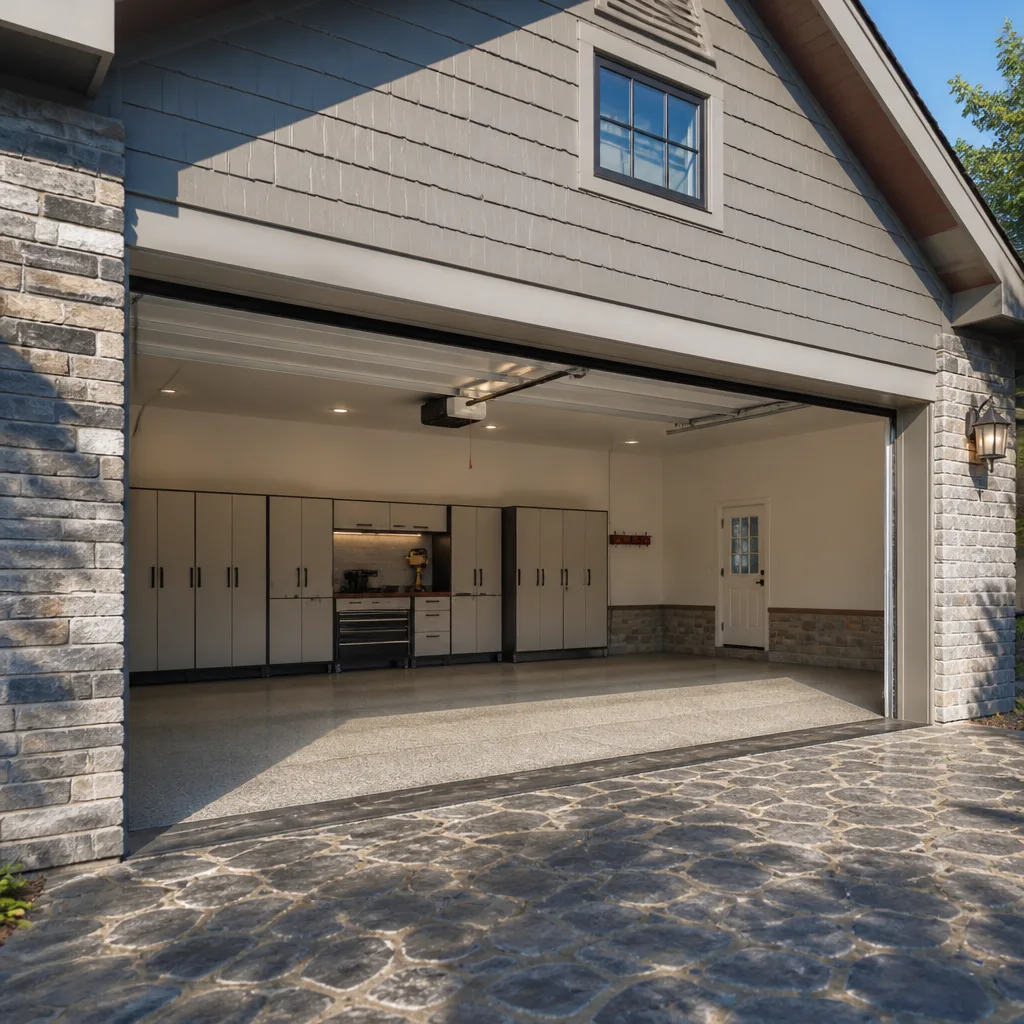 LiftMaster openers
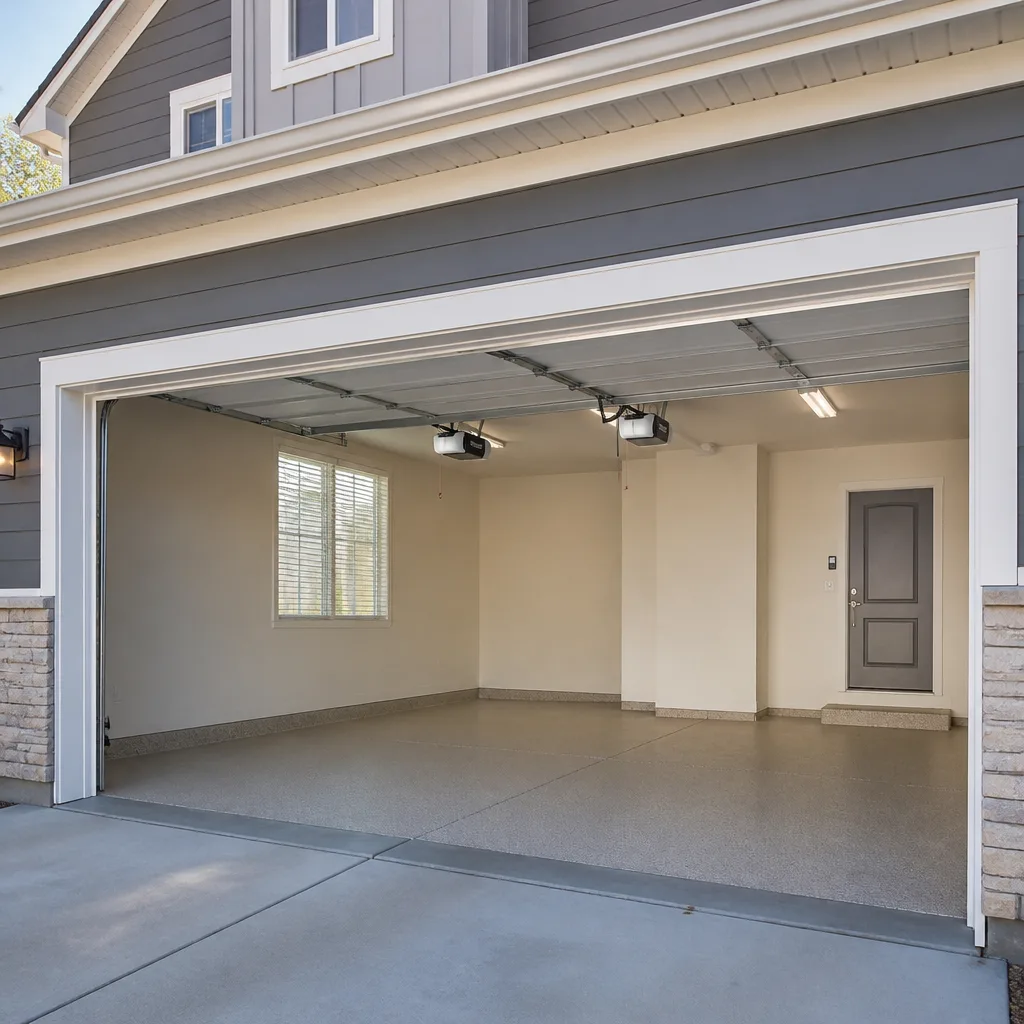 Chamberlain openers
Full 25-point door and opener safety check with every visit - springs, cables, rollers, tracks, and your LiftMaster or Chamberlain opener included
You get a price before we start. It does not change when the pro arrives.
Get your free estimateThe Complete Guide to Garage Doors in Torrington
Most Torrington homes were built before insulated garage doors were standard, which means the door sitting in your opening right now is probably the single largest uninsulated surface in your house. That changes how you should think about every decision: which panels to buy, which opener to pair with them, and which repairs are actually worth doing. A garage door in Torrington isn’t a commodity product you order from a catalog and forget. It’s a working system fighting wet winters, humid summers, and a housing stock that was never designed around today’s door standards. This guide walks through how our climate and architecture shape material choice, sizing, insulation, opener drive type, and the repairs that keep coming back to us. We’ll also cover the mistakes that cost Torrington homeowners the most, and when it’s time to stop researching and call.
Quick Answer
The right garage door for a Torrington home depends on three things: the actual size of your rough opening (older homes here often don’t match standard dimensions), how well the door needs to insulate an attached versus detached garage through Connecticut winters, and which material holds up best to local freeze-thaw cycles. Steel with a proper thermal break usually wins for the average colonial or cape, but plenty of Torrington homes call for wood or composite. Pair the door with a belt-drive opener for quieter, smoother operation in cold weather, and get a professional measurement before ordering anything.
Styles & brands we work with
- Raised-panel steel
- Carriage house
- Modern flush
- Full-view glass
- LiftMaster openers
- Chamberlain openers
Table of Contents
- How Torrington’s Climate Treats Steel, Wood, and Composite Doors
- Why Older Torrington Homes Have Non-Standard Rough Openings
- Insulation and R-Value: Attached vs. Detached Garages in CT Winters
- Which Opener Drive Type Survives Torrington’s Temperature Swings
- Matching Panel Style to Colonial and Cape Architecture
- Brands We Work On and What That Means for You
- Repair or Replace? A Torrington Decision Framework
- Springs and Safety: What Not to DIY
How Torrington’s Climate Treats Steel, Wood, and Composite Doors
Torrington sits in a part of Connecticut that gets hard winters and humid summers, and that combination is rougher on garage doors than either season alone. Freeze-thaw cycles are the key thing to understand. Water gets into small gaps, freezes, expands, and works the gap wider. Repeat that dozens of times in a winter and even a well-built door shows wear. The material you choose determines how gracefully it handles all that.
Steel is the most common choice, and for good reason. Modern steel doors come with coatings and backing that resist moisture well. The weak points are the bottom edge and the hinges, where water can sit. A steel door with a proper bottom seal and galvanized hardware handles Torrington cycles fine, but a cheap steel door with poor edge protection is the one that starts rusting first.
Wood looks great on a cape or colonial and it’s more common here than you’d think. It’s also the most demanding material to own in this climate. Wood absorbs moisture, expands, and needs repainting or restaining every few years to stay protected. Skip the maintenance and you’ll see warping, rot at the bottom edge, and cracking panels within a decade. If you love the look, that’s a fair trade. Just budget for the upkeep.
Composite sits between the two. It mimics wood’s appearance without the moisture problems, so it holds up much better to Torrington’s wet seasons. The main trade-off is cost, and it can fade slowly over many years if it faces direct afternoon sun.
In our experience, the practical ranking for Torrington homes is:
- Steel with a thermal break and good edge seals – best value, longest lifespan with basic care
- Composite – best for homeowners who want the wood look without the maintenance
- Wood – the most beautiful option, but only for owners committed to regular finishing
Any of the three will serve you well if you buy a door built to handle moisture. The mistake is buying on price alone and ending up with a door whose weak points match exactly where Torrington winters attack.
Why Older Torrington Homes Have Non-Standard Rough Openings
Here’s a detail most buying guides skip: the door that fits your neighbor’s house may not fit yours, even if the houses look the same from the street. Torrington’s housing stock is old, and older construction didn’t follow modern dimensional standards. Builders built what the framing allowed, not what a manufacturer’s catalog required. The result is that a lot of Torrington homes have rough openings that fall between the sizes a factory produces.
This matters because you can’t order a door that doesn’t exist. Standard residential doors come in set widths and heights, and if your opening sits half an inch outside that set, your options narrow. The adjustments get made during installation, but only by someone who measures correctly first.
The problem compounds with door style. A standard panel door can often be trimmed or the opening re-framed to fit. A carriage-style door with a fixed architectural design has far less flexibility. If you’re drawn to a specific look, you want the measurement done before you fall in love with a product line.
What a proper professional measurement covers:
- Actual width and height of the rough opening, measured at multiple points because old framing is rarely square
- Headroom above the opening, which determines the track and spring configuration
- Side clearance for the tracks and hinges
- Whether the ceiling allows for standard or low-headroom hardware
- The condition of the framing itself, which can be soft or out of plumb in older homes
If you’re replacing a door on anything built before roughly the 1980s, expect the measurement to reveal something. In our experience, that’s normal here, and it’s exactly why we measure on-site before quoting a new door. A free estimate that includes a real measurement is the only quote worth relying on for an older Torrington home.
Insulation and R-Value: Attached vs. Detached Garages in CT Winters
Insulation is where the housing stock and the climate meet head-on. If your garage shares a wall with your living space, an uninsulated door pins your furnace against a large, cold surface. If your garage is detached, insulation still matters but the economics are different. The garage itself isn’t governed by the same energy rules as the house, so the upgrade is a comfort and durability decision more than a code requirement.
R-value is the measure of how well a door resists heat flow. Higher is better, but higher also means more money per door. How much R-value you actually need depends on three things:
- Attached garage, heated living space above or beside it: go for a properly insulated door with a thermal break. This is where the upgrade pays for itself fastest in a Connecticut winter.
- Attached garage, unconditioned, used as cold storage: a mid-range insulated door makes the space usable and reduces condensation, which matters for tools and stored items.
- Detached garage: insulation keeps the interior warmer in winter and cooler in summer and reduces moisture problems, but the energy savings won’t be dramatic. Choose based on whether you spend time out there.
One thing that gets overlooked: an insulated door only performs well if the edges are sealed. That means a good bottom seal, weatherstripping around the perimeter, and hardware that keeps the door snug when closed. A high-R-value door with worn seals loses much of its advantage. If your priority is keeping the house warm and you want the full job done properly, our garage door repair service covers seals, tracks, and hardware alongside panel work.
The bottom line: for an attached garage in Torrington, an insulated door with sealed edges is the sensible choice. For a detached garage, insulation is about comfort and longevity rather than savings, and that’s a perfectly good reason too.
Which Opener Drive Type Survives Torrington’s Temperature Swings
Openers are often treated as an afterthought, but the drive type you choose matters in a climate that swings from humid summer days to hard winter nights. The three main types are belt, chain, and screw, and they respond to temperature very differently.
Belt-drive openers use a rubber belt to move the door. They run quietly, vibrate less, and handle temperature swings well. Belts can wear over time, but in a well-built unit they’re the most comfortable choice for a door attached to living space, which describes most Torrington homes. If your bedroom or living room shares a wall with the garage, belt is almost always the right pick.
Chain-drive openers are the classic, durable option. They’re noisier and need occasional lubrication, but they’re rugged and tend to last. Chains can stiffen slightly in cold weather, which makes them louder, but they keep working. Good for detached garages where noise doesn’t matter.
Screw-drive openers use a threaded rod and fewer moving parts. They need less maintenance and run quietly, but they’re less common and sometimes cost more. They handle cold reasonably well.
Whatever drive type you pick, brand and compatibility matter. We’re factory-familiar with LiftMaster, Chamberlain, Genie, Clopay, Amarr, Wayne Dalton, Craftsman, and Raynor, so an opener paired from that list gets matched to its system and tuned properly. A popular mistake here is buying an opener that doesn’t match your door’s weight and balance. A door that’s out of balance puts strain on any opener, which shortens its life and explains a lot of the noisy, jerky operation we get called out to fix. If your opener is failing, our garage door opener repair service covers motors, remotes, sensors, and not just the opener. A proper call covers the door and the opener, because the two depend on each other.
Matching Panel Style to Colonial and Cape Architecture
Torrington’s architectural character leans heavily toward colonial and cape homes, and a garage door that fights that style looks wrong no matter how well it’s built. The good news is that several panel styles work with these homes. The trick is choosing one that respects the proportions and detailing.
For a colonial, traditional raised-panel doors are the natural fit. The clean, rectangular panels line up with the home’s boxy geometry. A short-panel or long-panel pattern both work; short-panel echoes the window grid, long-panel looks a little more relaxed.
For a cape, carriage-style doors are a strong option. Capes often have smaller garages and more detail in the roofline, and a carriage door with crossbuck trim or decorative hardware adds the kind of texture older cape homes carry. Just remember that the rough opening may limit which carriage designs are available, so measure first.
A few style principles that hold across both:
- Match proportions to the house, not the catalog. A door that’s too wide or too tall for the facade looks off.
- Keep the color in the same family as the trim. Contrast is fine, but too much contrast on a traditional house reads as a mistake.
- Skip modern full-view glass and flat panel styles unless your home is genuinely contemporary.
- Choose hardware to suit the house: simple hinges for a colonial, decorative straps for a cape.
This is also a reason a door purchase is a design decision as much as a mechanical one. A specialized garage door company handles both the structure and the opener in one visit, which keeps the style you chose from being undercut by noisy hardware or a mismatched setup. Our Torrington Garage Door Repair team covers the full system, panels and opener together. If you want help matching a style to your home, ask during the estimate.
Brands We Work On and What That Means for You
Brand knowledge matters more than most homeowners realize. Every opener and door system has its own quirks: how it reads sensors, how it handles self-reversal, what its common failure points are. A generalist company may know a handful of brands. We’re factory-familiar with eight of the most common residential garage door and opener brands on the market.
That list includes LiftMaster, Chamberlain, Genie, Clopay, Amarr, Wayne Dalton, Craftsman, and Raynor. Those names cover most of what you’ll find on homes in this area, so the technician who arrives already knows the system in front of them rather than reading the manual on the spot.
Why does this matter in practice?
- Faster diagnostics. Knowing a brand’s typical failure points gets to the problem quickly, which is exactly what you want during an emergency repair.
- Correct parts. Brand-specific parts fit right the first time, which means fewer return visits and no improvised fixes.
- Proper pairing. A door and opener from systems we know get matched correctly, which reduces wear and noise over the years.
- Accurate advice. When a repair isn’t worth it, we can tell you because we know the brand’s lifespan and history.
If your door or opener isn’t on that list, don’t panic. In our experience it’s always worth asking. And if you’re buying new, choosing from a brand a specialist already knows makes future service simpler.
Repair or Replace? A Torrington Decision Framework
This is the question we answer most often, and there’s no single rule. A repair that holds for years is the right call; a repair that’s a bandage on a failing door is money wasted. Here’s how to think it through in a Torrington context.
Lean toward repair when:
- The panels are structurally sound and the door is balanced
- The problem is isolated: one spring, one roller, a bent track, a failing sensor
- The door still seals well and doesn’t let cold air or water in
- The opener is working and the door’s weight is within its rated capacity
Lean toward replacement when:
- Panels are rotted, rusted through, or cracked in multiple places
- The door is uninsulated on an attached garage and you’re losing heat year-round
- Hardware is failing across the board, not just one part
- The rough opening or tracks are out of square and major re-framing is needed
- You want a different style and the existing door can’t be adapted
Springs deserve their own mention. A spring replacement is a repair, not a sign the door is finished. It’s one of the most common jobs we do, and it’s a repair that returns the door to full function for years. Because it’s safety-critical, our garage door spring repair is handled in-house rather than referred out. Replacing a single spring is one job; a matched pair is usually replaced together and costs more, which is worth knowing before you get an estimate.
Pricing is per job and given as an estimate before any work begins. The written estimate is the number that stands. If a technician finds something unexpected, they’ll explain it and confirm before continuing, so nothing changes without your agreement.
Springs and Safety: What Not to DIY
Garage door springs are stored energy. A torsion spring under load can release violently, and an extension spring in the same state carries serious injury risk. This is not a repair to learn from a video. Even experienced homeowners shouldn’t attempt it, and here’s how to handle a spring problem safely.
What you should do if a spring fails:
- Keep everyone away from the door. A door with a broken spring can drop unexpectedly.
- Don’t force the door open or closed, even by hand.
- Disconnect the opener if the door is stuck, so it doesn’t fight a jammed mechanism.
- Call a trained professional. Spring work is a specialist job, which is why we keep it in-house rather than sending it to a generalist.
The same caution applies to opener wiring and any electrical work around the opener. Electrical components and wiring should be handled by a trained professional, not tackled as a weekend project. If a door won’t open or close and security is at stake, emergency garage door service is a standard part of what we offer, not an upsell. Our technicians have up to 12 years of experience, and spring repair is exactly the kind of job that experience is for.
Common Mistakes to Avoid
These come up again and again in Torrington, and each one costs more in the long run than the money it saves.
- Ordering a door without measuring the rough opening. Older homes here often don’t match standard sizes, and a door that doesn’t fit can’t be fixed by wishful thinking at install time. Measure first, order second.
- Buying a cheap steel door for a heated attached garage. The uninsulated surface becomes your most expensive heat leak. Pay for insulation where the garage shares a wall with living space.
- Ignoring a failing bottom seal. A worn bottom seal lets water in and that water is what starts rust. Seals are cheap and protect everything above them.
- Assuming all door brands fit all openers. A mismatched setup strains the opener and makes the door noisy. Choose from a system that pairs properly.
- Skipping annual lubrication of moving parts. Rollers, hinges, and springs that go dry wear faster, which is a slow grind in the cold.
- Replacing a whole door when a spring or a few panels are the only real problem. A proper diagnosis often finds an isolated cause. Get the assessment before you assume the worst.
- Choosing a wood door without a plan to maintain it. Wood can be the right choice for a cape, but only for homeowners willing to finish it every few years. Otherwise a composite is a better fit.
See the difference
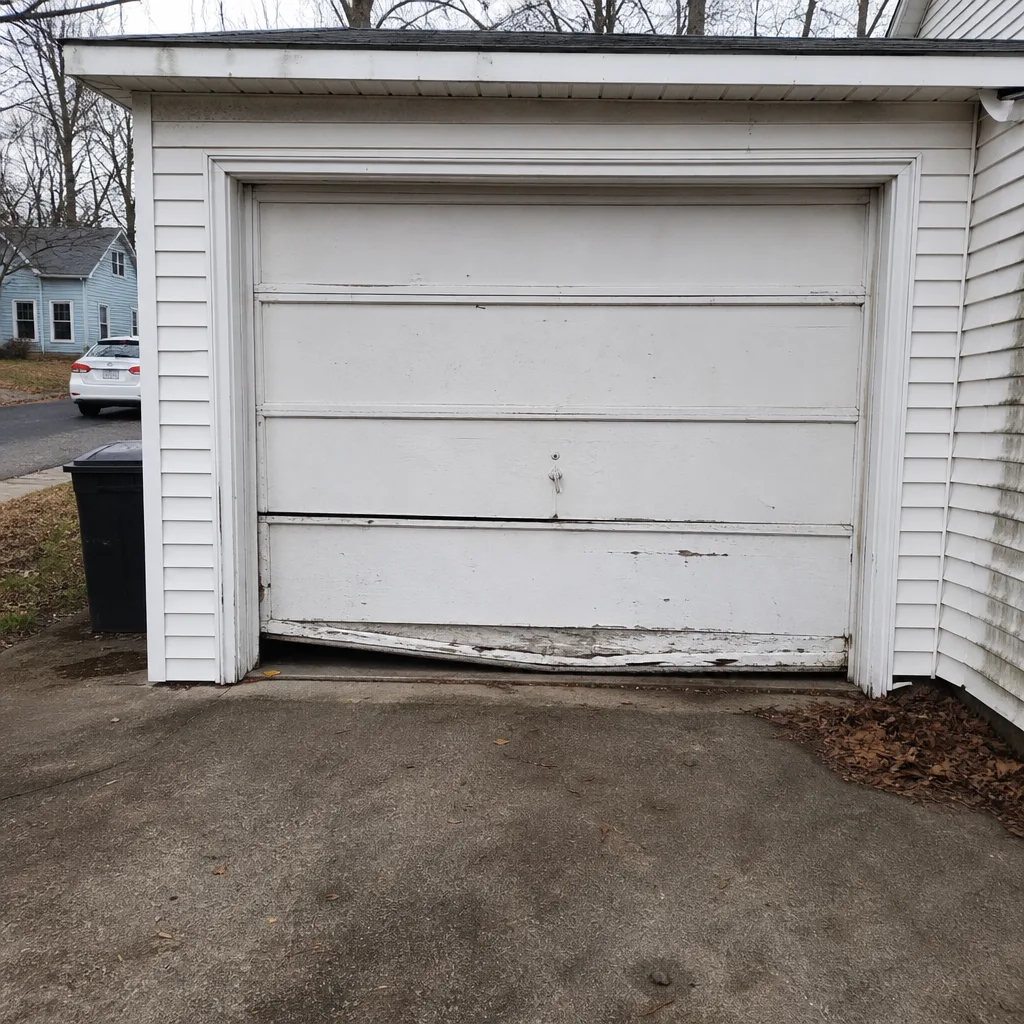 Before
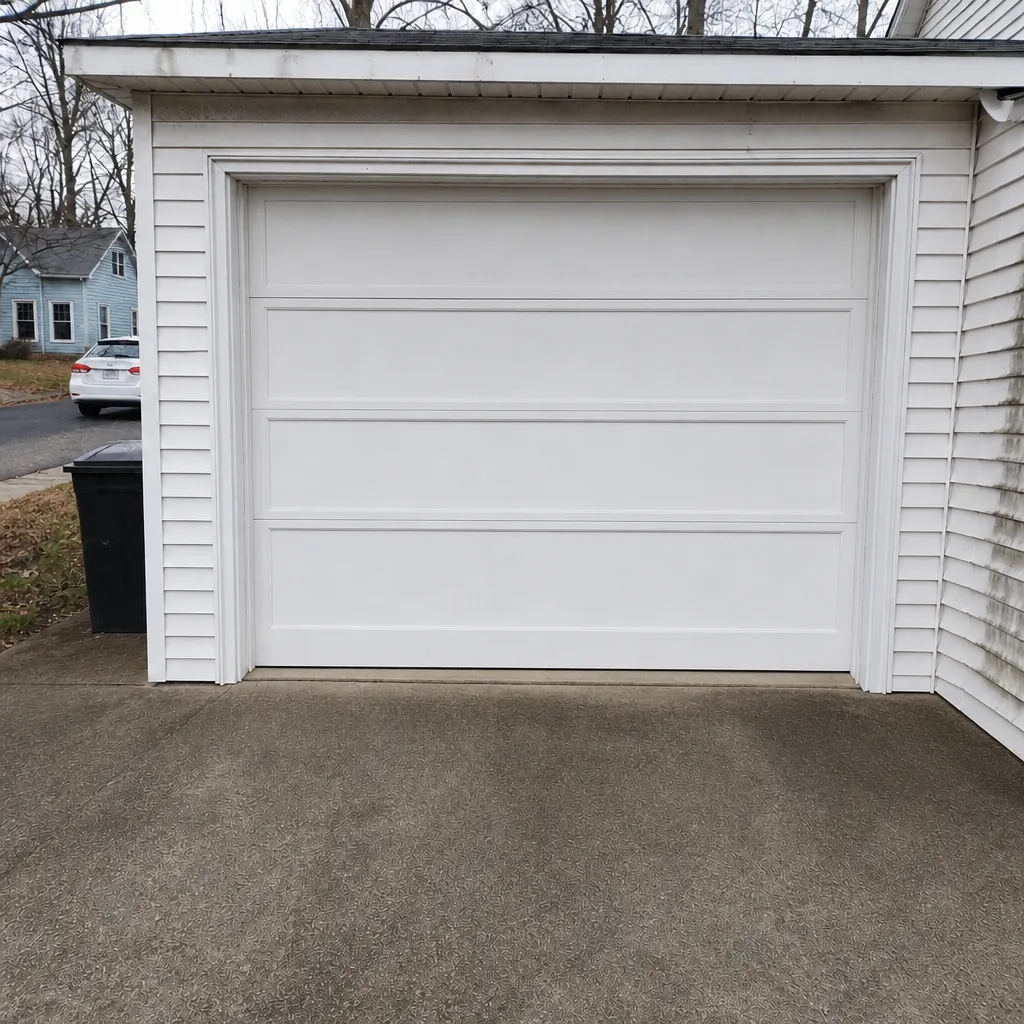 After
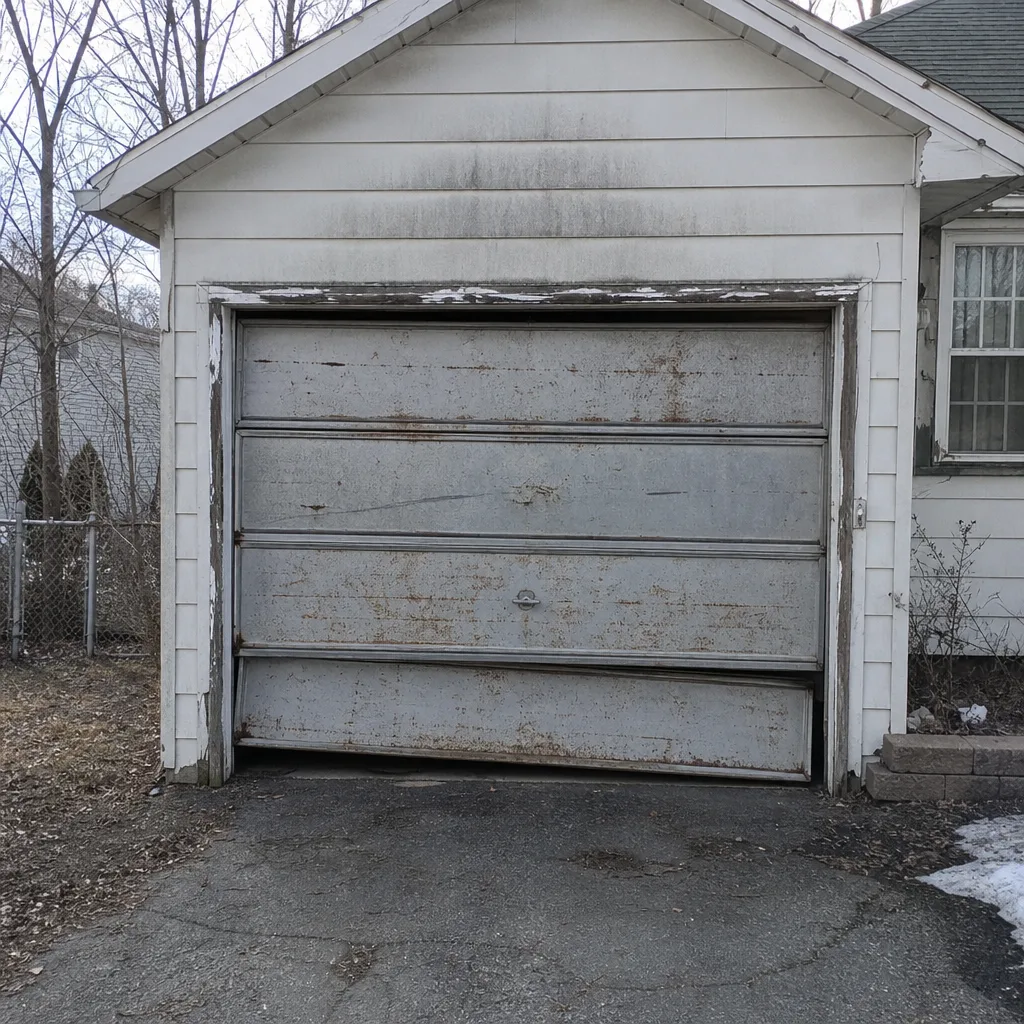 Before
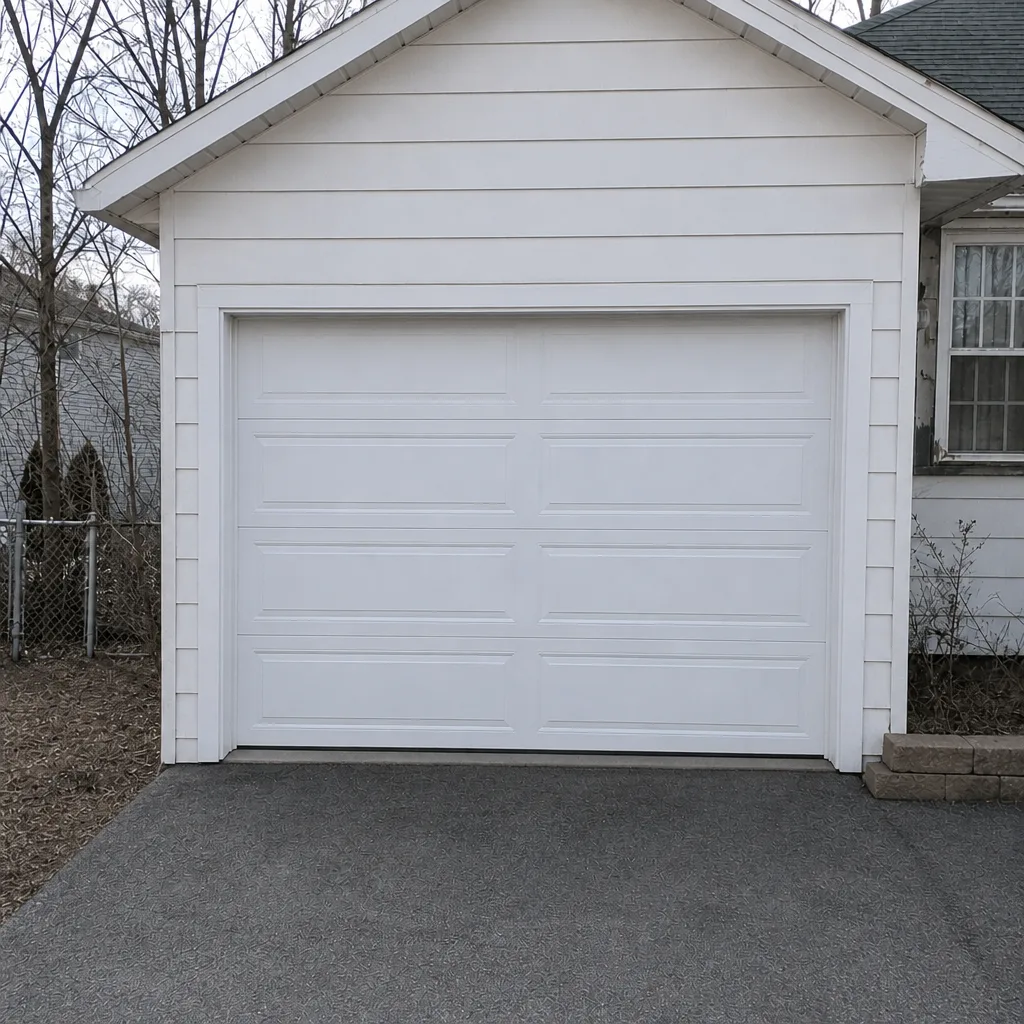 After
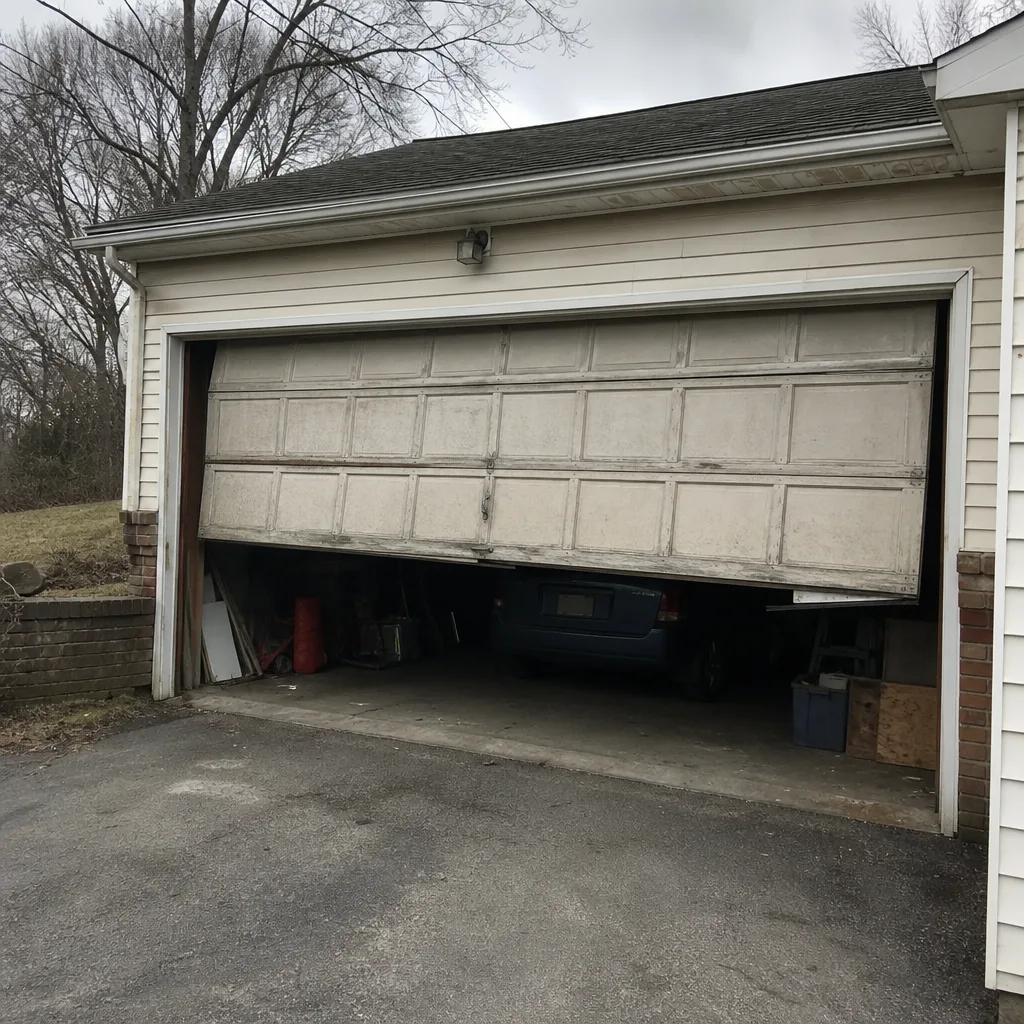 Before
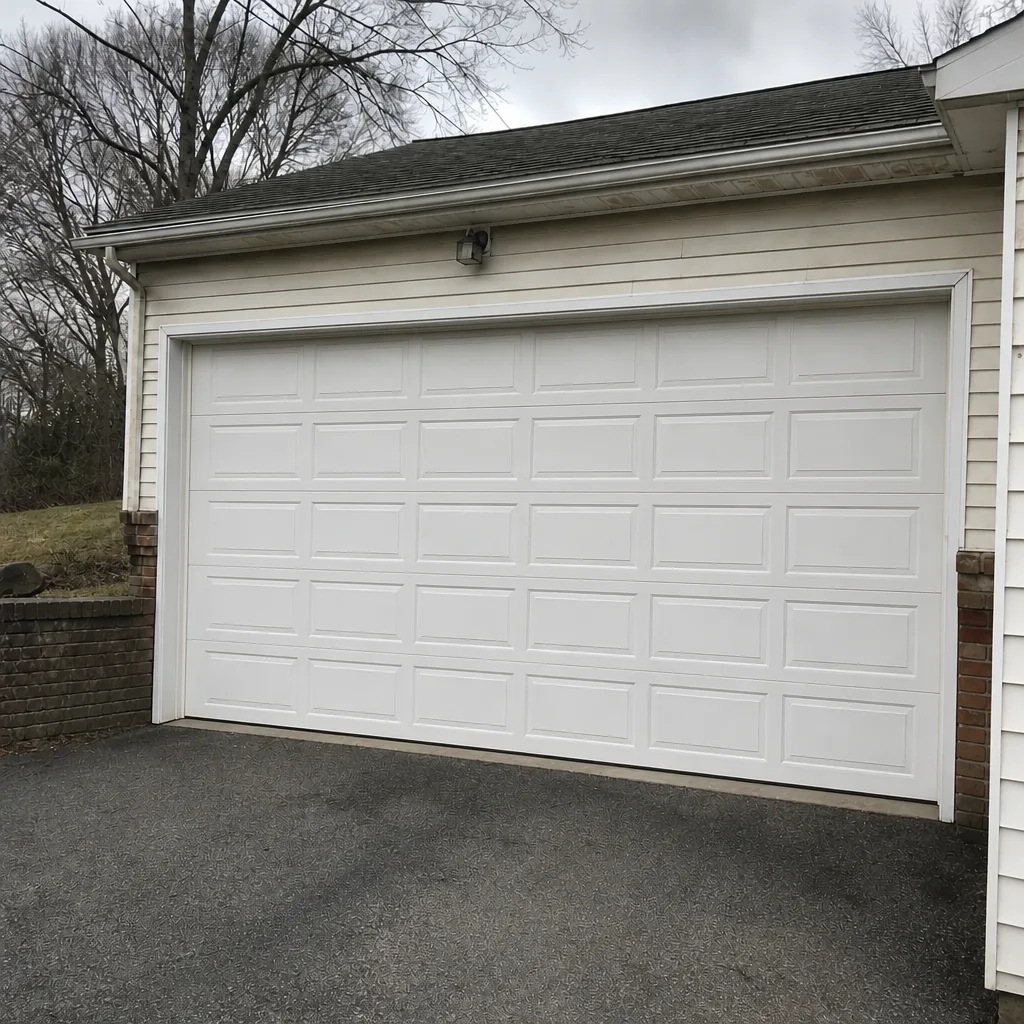 After
When to Call a Professional
Some problems you can live with for a while. Others need a call right away, and knowing which is which saves you money. Call a professional when a spring has failed, when a door won’t open or close, when the opener runs but the door doesn’t move, when the door comes down unevenly, when a panel is cracked or the framing looks soft, or when you want a real measurement before ordering a replacement. If the door is stuck and security is at stake, that’s exactly what emergency service is for. Torrington Garage Door Repair offers free estimates in Torrington – call (844) 629-7893. We quote before work starts, and the price you agree to is the price you pay.
Frequently Asked Questions
A well-maintained steel door typically lasts 15 to 20 years in Connecticut conditions, while a wood door can last similar if it’s refinished every few years. Composite doors often hold the middle ground. What shortens any door’s life most here is water at the bottom edge and neglected hardware. Seals and lubrication matter as much as the material.
Yes, if the garage is attached to heated living space. The door is usually the largest uninsulated surface in that setup, and insulation with sealed edges pays back fastest in cold Connecticut winters. For a detached garage, insulation is more about comfort and moisture control than savings, but it’s still worth considering. Call (844) 629-7893 for a free estimate.
Pricing is per job, and we don’t quote ranges until we see the door. You’ll get a written estimate before any work starts. The written figure is the final price, and if the job changes it changes with your agreement. For an exact quote, call (844) 629-7893, and estimates are free.
For repairs, often yes, and emergency service is a standard part of what we do when a door won’t open or close and security is at stake. Replacement and installation work is measured and scheduled, so we don’t promise same-day on those. Call (844) 629-7893 and we’ll tell you what’s realistic.
No. The estimate is quoted and agreed before any work begins, and that’s the number you pay. If a technician finds a problem that changes the scope, they’ll explain it and confirm with you before proceeding, so nothing is added without your say-so. Call (844) 629-7893 for a free estimate.
The local professionals we connect you with are licensed and insured as their state requires. Spring work is safety-critical and handled in-house, and our technicians have up to 12 years of experience. If you’re unsure what a job needs, call (844) 629-7893 and we’ll walk you through it.
The Bottom Line
Your garage door in Torrington is a system shaped by this place. Freeze-thaw cycles push steel, wood, and composite in different ways. Old housing stock often rules out certain product lines because the rough opening doesn’t match. Attached garages in Connecticut winters make insulation a real decision, and opener drive type matters more than the catalog suggests. Match the panel style to your colonial or cape, choose a brand a specialist actually knows, and get a real measurement before you order anything. When a spring fails or a door sticks, call a professional rather than tackle it. The decisions are simpler once you see the door as part of a specific place.
Torrington Garage Door Repair handles garage door repair, opener repair, spring repair, installation, and emergency service for the households that need it. We service LiftMaster, Chamberlain, Genie, Clopay, Amarr, Wayne Dalton, Craftsman, and Raynor systems. Call (844) 629-7893 for a free estimate.
Written by the team at Torrington Garage Door Repair.