Last updated November 22, 2026
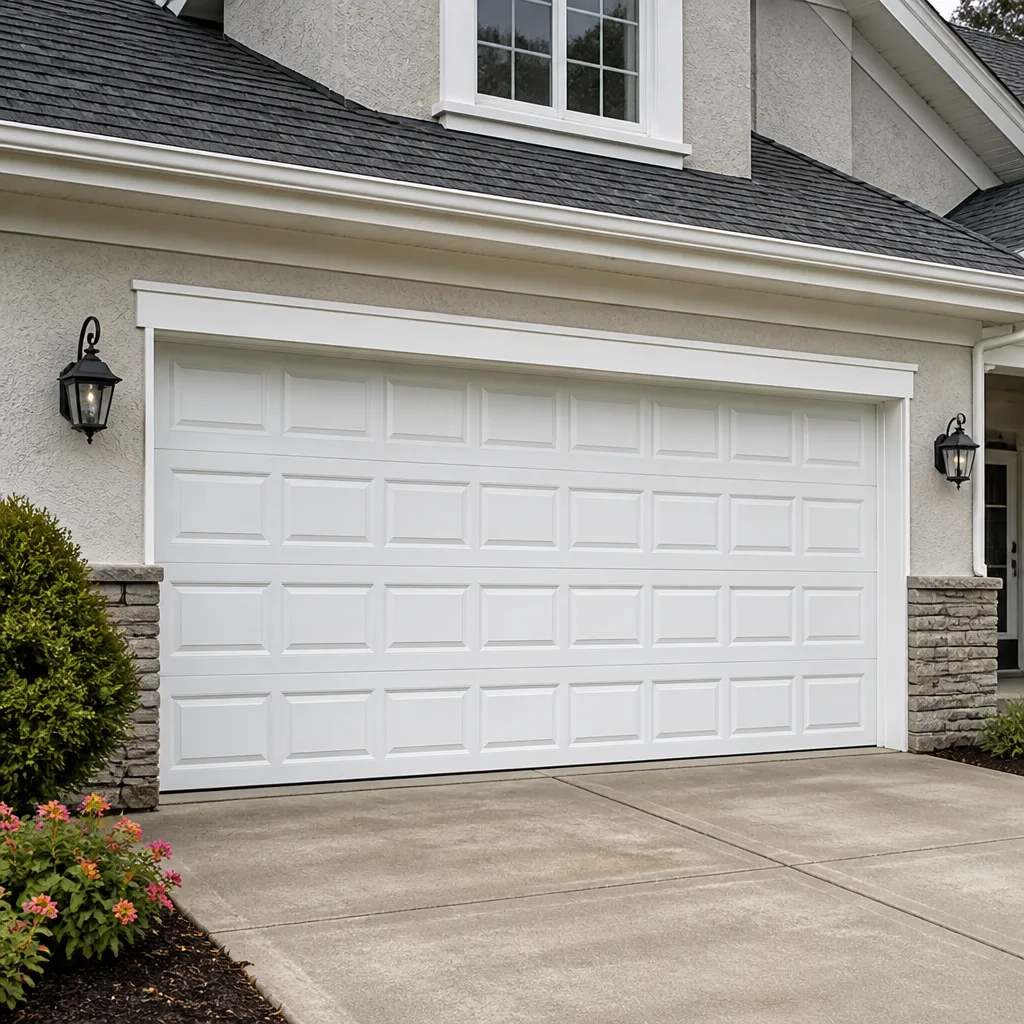 Raised-panel steel
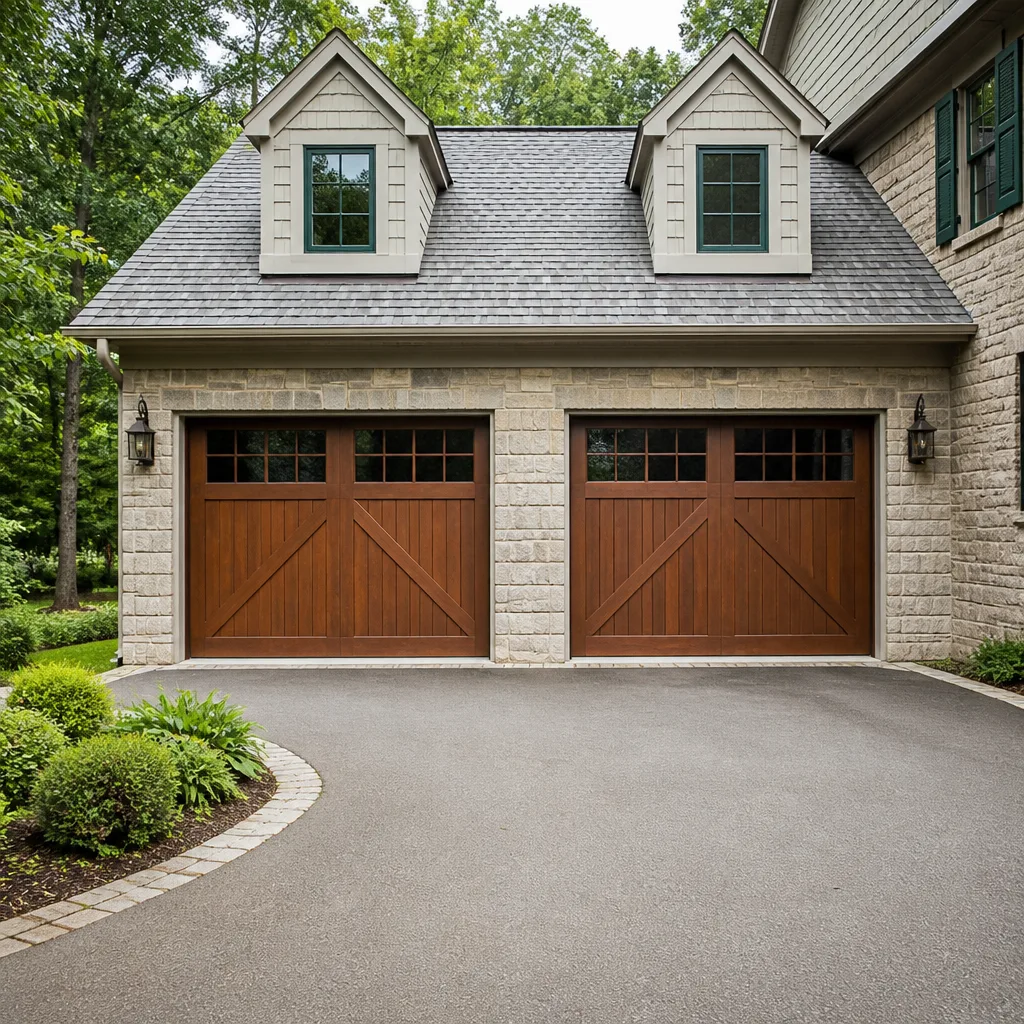 Carriage house
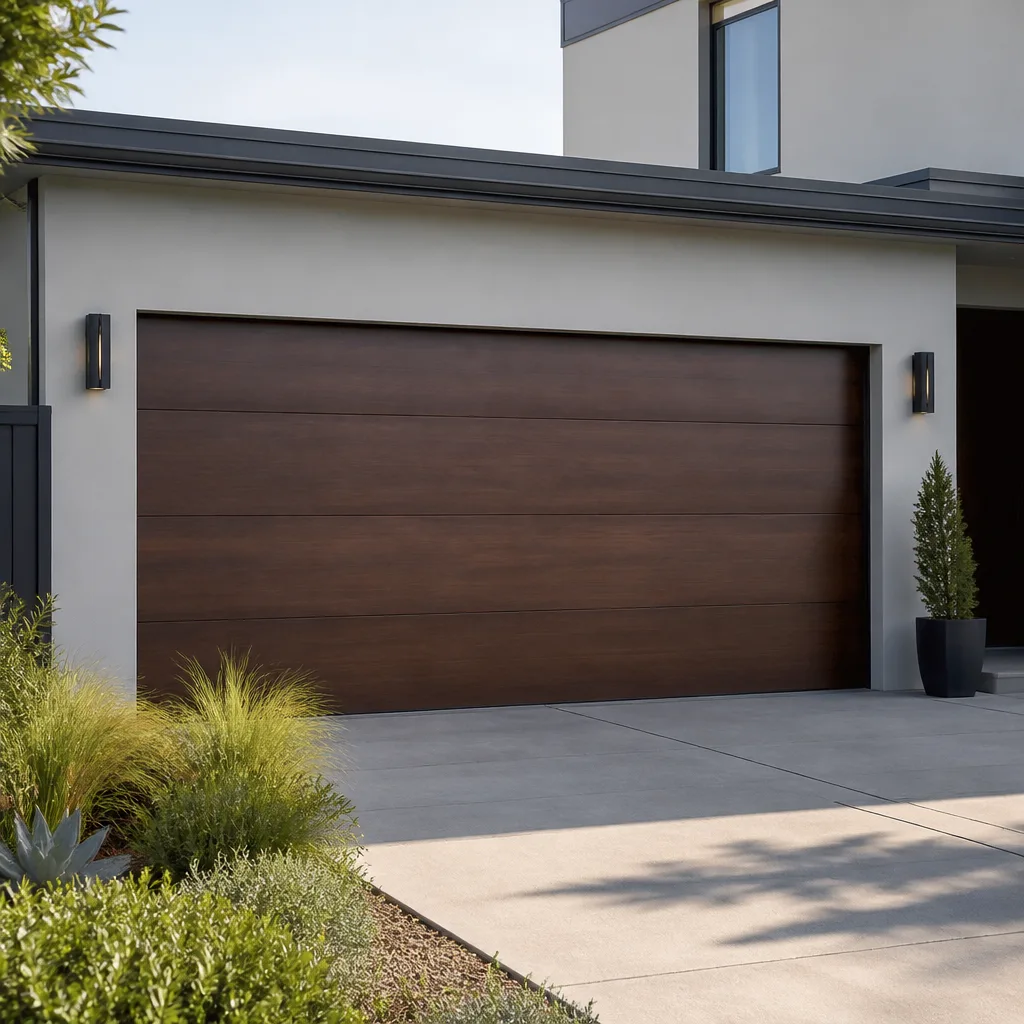 Modern flush
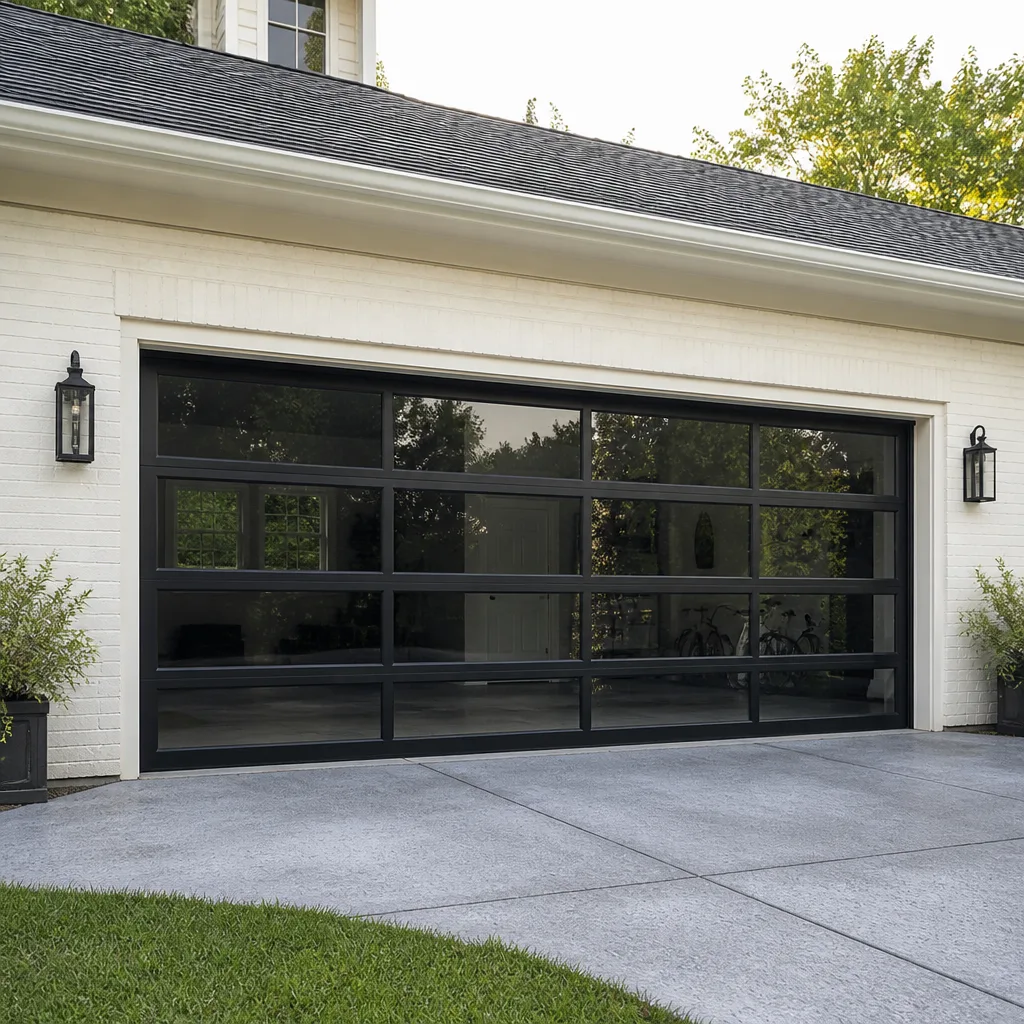 Full-view glass
 LiftMaster openers
 Chamberlain openers
Full 25-point door and opener safety check with every visit - springs, cables, rollers, tracks, and your LiftMaster or Chamberlain opener included
You get a price before we start. It does not change when the pro arrives.
Get your free estimateSeasonal Garage Door Care for Torrington: Year-Round Homeowner’s Guide
October, not January, is when most garage door failures in Torrington get set in motion. That surprises people. They expect the coldest week of the year to be the villain, but by the time the first hard freeze arrives, the damage is usually already done: the lubrication applied in spring has worn off, the metal is dry, the bottom seal has quietly taken on water, and the first serious cold snap simply finishes the job. Garage doors don’t fail on a schedule. They fail on a calendar, and Torrington’s calendar has four genuinely different seasons, each with its own failure mode. This guide walks through the tasks that matter in each one, in the order the year actually delivers them.
Quick Answer
Seasonal garage door care in Torrington comes down to four task windows: inspect and lubricate in fall before the first freeze, clear ice bonds and watch the bottom seal through winter, check track alignment and heat expansion in summer, and address road salt damage and melt runoff in spring. The single highest-value habit is a pre-freeze lubrication pass in October, because dry rollers and hinges are what turn a cold morning into a snapped spring.
Styles & brands we work with
- Raised-panel steel
- Carriage house
- Modern flush
- Full-view glass
- LiftMaster openers
- Chamberlain openers
Table of Contents
- Why Garage Doors Age Differently in Torrington
- Fall: The Pre-Freeze Lubrication Protocol
- Winter: The Ice Bond Problem
- Spring: Road Salt, Melt Runoff, and Bottom Seals
- Summer: Heat Expansion and Track Alignment
- Seasonal Opener Sensitivity and Auto-Reverse Checks
- The Torrington Garage Door Calendar at a Glance
- Common Mistakes to Avoid
Why Garage Doors Age Differently in Torrington
Torrington sits in the western highlands of Connecticut, and that geography matters more for your garage door than most homeowners realize. The town runs along the Naugatuck River valley, and the surrounding hills mean cold air drains down into low areas overnight. That produces wider temperature swings than the shoreline or the Hartford basin gets. A door in Torrington can go from a mild afternoon to a hard overnight freeze and back again within eighteen hours during the shoulder seasons, and that cycle is harder on springs, cables, and seals than a steady cold would be.
The housing stock matters too. Torrington has a large share of older homes, many with garages that were added or converted over the decades. Attached garages on these homes are often unheated and poorly insulated, which means the door itself acts as part of the thermal envelope. It gets cold on one side and warm and moist on the other. That moisture finds its way into the bottom seal, the panel seams, and the hinges, and it expands and contracts with every freeze-thaw event.
What that adds up to is simple: a garage door in Torrington lives a harder life than the same door in a milder climate. The good news is that the failure modes are predictable, and predictable failures are the ones you can prevent. We’ve worked on doors throughout Torrington, from the older neighborhoods near downtown to the newer construction on the edges of town, and the pattern holds. The doors that last are the ones where the right task gets done at the right time of year.
What “Seasonal Care” Actually Means
A lot of maintenance advice treats the garage door like a car that needs an annual service. That’s the wrong mental model. A garage door is a mechanical system with a handful of wear points, and each of those wear points responds to a specific season. The spring doesn’t care about summer. The bottom seal cares a great deal about winter. The track cares about summer heat. If you do everything in one annual session, you’ll do some tasks too late and some too early.
This guide breaks the year into four task windows and gives you the specific reason each one exists. If you follow only the fall section, you’ll prevent the most expensive category of failure. If you follow all four, you’ll get years of service out of the same door that a neglectful homeowner replaces prematurely.
Fall: The Pre-Freeze Lubrication Protocol
Fall is the single most important season for garage door care in Torrington, and the task that matters most is lubrication. Specifically: lubricating the moving metal parts before the first freeze, not after. The reason is that cold weather doesn’t create friction problems so much as it exposes them. If your rollers and hinges are dry going into winter, every cold morning is a small stress test on the spring and opener.
Why Silicone Spray Beats WD-40 on Rollers
This is the point most homeowners get wrong, so it deserves a clear explanation. WD-40 is a solvent-based product. It’s excellent at breaking loose stuck bolts and displacing water, and it’s a genuinely useful thing to keep in a garage. But on garage door rollers, hinges, and the torsion bar bearings, it does something you don’t want: it dissolves the factory grease and then evaporates, leaving the metal drier than it was before. In a cold climate, that’s the worst possible outcome. You’ve stripped the protective film right when you need it most.
Silicone spray behaves differently. It leaves a dry film that doesn’t attract dust or grit, it stays put in cold temperatures, and it doesn’t break down the existing lubricant. For a Torrington winter, that’s the right tool. A PTFE-based lubricant works well too, and so does a purpose-made garage door lubricant. The key is that it’s a lubricant, not a cleaner, and it stays where you put it.
The Pre-Freeze Task List
- Check the weather strip along the bottom of the door for cracks, tears, or a compressed profile. A seal that’s already failing will absorb water through winter.
- Apply silicone or PTFE lubricant to every roller, hinge, and the torsion bar bearings. A few seconds per fitting is enough.
- Test the balance of the door by disconnecting the opener (using the release handle) and lifting the door halfway. It should hold position with minimal effort. If it drops, that’s a sign of spring or cable wear, and it’s worth a professional look.
- Inspect the cables for fraying near the drum and the bottom bracket. This is a visual check only, not a hands-on one.
- Wipe down the panels and touch up any bare metal on the bottom edge, because that’s where rust starts in a wet climate.
If something on that list looks wrong, the fall is the right time to get it addressed. Waiting for it to fail in January means dealing with it in the cold, on a shortened timeline. Repairing a seal or a roller in October is a much easier job than replacing a spring in February. If you’d rather have someone walk through the whole door with you, garage door repair is what we do, and a fall inspection is the right moment to book it.
Why This Matters for Torrington Specifically
Torrington’s first hard freeze can arrive earlier than homeowners expect, sometimes with only a day or two of warning after a long mild stretch. That’s the same pattern that catches people out with their gutters and their hoses. The safest approach is to do the fall lubrication pass in early-to-mid October, not November. Once the metal is cold and dry, you’re too late. You can still lubricate in cold weather, but you’ve already put the system through its first stress test.
Winter: The Ice Bond Problem
The leading cause of spring damage in Connecticut garages is a frozen-to-ground door being forced open. It’s not a dramatic event. It’s a quiet morning, a door with an ice bond at the bottom seal, a homeowner who presses the opener button, and the opener or the springs absorbing a load they weren’t designed to handle. This happens in Torrington every winter, and it’s almost always preventable.
How the Ice Bond Forms
Meltwater from the car, from the roof above, or from a slushy driveway runs down to the bottom of the door and pools against the bottom seal. Overnight, that pool freezes. If the seal is intact and flexible, the ice bond is usually light and breaks with a little hand pressure. If the seal is worn, cracked, or compressed, the water gets into the seal itself and freezes inside it, which creates a much stronger bond. That’s why a seal check in fall pays for itself in winter.
What to Do If the Door Is Frozen
- Do not press the opener button repeatedly. If the door doesn’t move, the opener is transferring its torque to the springs and the door panel.
- Look for the ice bond at the bottom. It’s usually visible as a thin sheet of ice along the floor line.
- Break the bond gently with a soft tool, not a metal scraper. A plastic shovel or a rubber mallet tapped along the bottom of the door is enough.
- If the door still doesn’t move, stop. Forcing it is how springs break.
This is one of the cases where a small amount of patience prevents an expensive repair. If the door has already been forced and now won’t open properly, or you hear a loud bang from the torsion bar, that’s a spring failure and it needs a professional. We handle garage door spring repair as a core service, not as something we refer out, because spring work is safety-critical and not something to attempt yourself. Torsion springs are under enough tension to cause serious injury, and there’s no safe way to work on them without the right tools and knowledge.
Winter Checks Worth Doing Weekly
- Clear snow and ice from the bottom of the door before you open it. A quick pass with a broom is enough.
- Watch for a gap forming between the bottom seal and the floor. That gap is where water gets in and where cold air escapes into the garage.
- Listen for unusual sounds on the first open of the day. Cold weather makes a healthy door a little louder, but grinding, scraping, or a hard snap is not normal.
- Check that the safety sensors at the bottom of the track are clear of snow and debris. A blocked sensor will stop the door, and in cold weather the fix is usually visible.
Spring: Road Salt, Melt Runoff, and Bottom Seals
Spring in Torrington brings the damage that winter caused out into the open. The task that matters most is a close inspection of the bottom seal, because that’s where road salt and melt runoff concentrate. The bottom of the door is the lowest point of the system, and everything that runs off the car, the driveway, and the road above it ends up there.
What Road Salt Does to the Bottom of the Door
Road salt is corrosive to the metal edge of the bottom panel and to the steel track that sits at floor level. A door that gets a regular bath of salty runoff through winter will start to show rust along the bottom edge, and if the paint or finish is compromised, that rust spreads. The bottom seal itself is rubber or vinyl, and salt doesn’t rot it the way it rots steel, but salt-laden water sitting against the seal accelerates cracking and hardening. Once the seal is stiff, it doesn’t seal, and that’s when water gets into the door panels themselves.
The inspection is simple: get down at floor level and look at the bottom seal along its full width. Look for cracks, a compressed or flattened profile, gaps between the seal and the floor, and rust along the metal edge of the bottom panel. If the seal is visibly worn, replacing it in spring is a small job that prevents a much larger one. If the rust is already into the panel, that’s worth a professional assessment before it spreads.
The Spring Task List
- Inspect and, if needed, replace the bottom seal. This is the single highest-value spring task.
- Wash the bottom of the door, the track, and the floor of the garage to remove salt residue. A garden hose and a mild detergent are enough.
- Check for rust on the bottom edge of the door and treat any bare spots with a rust-inhibiting primer before they spread.
- Clear the track of grit and debris. Salt and sand collect there over winter and cause binding.
- Test the balance of the door again, since winter is a stress test on the springs.
If you find a damaged panel or a track issue during the spring inspection, that’s the time to deal with it. Torrington Garage Door Repair covers the full door system, including panels and tracks, and a spring inspection caught early is a much smaller repair than one caught in July. The same logic applies to a seal that’s clearly at the end of its life. Replacing it now costs far less than dealing with the water damage it causes later.
What to Do About a Sticking Door in Spring
If the door seems to stick as it opens in spring, the cause is usually one of two things. Either the track has picked up grit and sand from winter, or the door’s own balance has shifted because the springs are tired. A quick track clean often solves the first. The second is a balance issue, and that’s worth a professional check because it’s a sign the spring is losing tension.
Summer: Heat Expansion and Track Alignment
Summer is the season most homeowners ignore, and that’s a mistake. Heat has a real effect on the garage door system, and the failure mode is genuinely different from winter’s. A door that works fine in January can start binding in July, and the reason is thermal expansion.
Why Doors Bind in Summer
The track that guides your door is steel, and steel expands when it heats up. That expansion isn’t dramatic in absolute terms, but the clearances in a garage door track are tight. A few millimeters of expansion, combined with a door that’s slightly out of alignment, is enough to cause a bind. The same door that runs smoothly at forty degrees can screech and drag at ninety. Older homes in Torrington are especially prone to this, because the original garage construction didn’t always account for thermal movement in the track mounting.
The other summer factor is humidity. Torrington summers are humid, and wood-framed garages absorb moisture. That can affect the mounting points of the track over time, which is one more reason the track should be checked seasonally.
The Summer Task List
- Run the door up and down and listen for scraping, grinding, or a bind at any point.
- Check that the track is clean and clear. Grit causes more problems in summer because the door is expanding against it.
- Look at the mounting brackets. If they’ve shifted or loosened, the track is out of alignment even if it looks straight.
- Check the gap between the track and the rollers on both sides. It should be even. A visible difference from one side to the other is a sign of misalignment.
- Lubricate the hinges and rollers lightly if you didn’t get to it in fall. A light silicone spray restores the film without attracting dust.
If the door is binding, don’t force it. Forcing a binding door puts stress on the opener motor and the springs, and the fix is usually a track realignment, which is a professional job. Opener problems often show up as a summer symptom too, because the motor is working harder against a binding door. garage door opener repair covers the motor, sensors, and remotes, and the first thing we check on a summer opener complaint is whether the door itself is binding.
The Torrington Summer Detail
Torrington’s summer heat is moderate by Connecticut standards, but the temperature swings between day and night are wider here than in the lower valley. That daily cycle of expansion and contraction is what loosens track brackets over time. A door that binds in July and frees up in September is telling you the track is on the move. Left alone, that eventually becomes a track that’s genuinely out of alignment, and that’s a bigger repair.
Seasonal Opener Sensitivity and Auto-Reverse Checks
Your opener’s auto-reverse system is the safety mechanism that stops and reverses the door if it meets an obstruction. It’s tested at the factory and it works, but its settings are calibrated for average conditions. Cold weather changes those conditions. Grease in the opener mechanism thickens in cold, the door itself runs heavier, and a sensitivity setting that was perfect in September can be too tight in January. That’s how auto-reverse failures happen, and it’s the reason the sensitivity check belongs on a seasonal list rather than an annual one.
How to Test the Auto-Reverse
- With the door fully open, place a solid object like a box or a piece of lumber in the path of the door.
- Press the button to close the door.
- The door should stop and reverse when it meets the object. If it doesn’t, the system needs adjustment.
- Test the photocell sensors by waving an object in front of them while the door is closing. The door should reverse.
- Repeat the test once the cold weather arrives, because that’s when settings drift.
The sensitivity adjustment itself is usually a dial or a set of screws on the opener housing, and the procedure varies by brand. On a LiftMaster or Chamberlain unit, it’s typically a labeled adjustment on the back or side. On a Genie, it’s often a set of screws under a cover. If you’re not sure which one you have, the brand name will be on the motor housing. We’re factory-familiar with those brands, along with Clopay, Amarr, Wayne Dalton, Craftsman, and Raynor, so when a technician arrives we already know how the unit is adjusted and how it’s meant to behave.
Why Cold Weather Drifts the Settings
There are two mechanisms at work. The first is that the grease inside the opener thickens in cold, so the motor has to work a little harder to move the door. That extra load can look to the opener like an obstruction, which triggers a false reversal. The second is that the door itself runs heavier in cold because the springs are less responsive. Both effects push the sensitivity setting in the same direction: what was fine in summer now triggers too easily, or in some cases too late. Testing the system as the season changes catches the problem before it becomes a habit of the door reversing on its own.
If the door reverses on its own repeatedly and adjustment doesn’t fix it, the cause may be a failing sensor, a worn spring, or a motor issue. Opener work is a specialist job, and a generalist who doesn’t work on doors every day will often replace parts instead of diagnosing the actual cause.
The Torrington Garage Door Calendar at a Glance
Here’s the whole year on one page, for readers who want the short version. Each task window exists for a specific reason, and doing the right task at the right time is what separates a door that lasts from one that fails early.
- Early-to-mid October: Full pre-freeze lubrication pass with silicone or PTFE spray. Check the bottom seal. Balance check. Visual cable inspection. This is the highest-value task of the year.
- November through March: Weekly check of the bottom seal and the ice bond. Clear snow and ice from the bottom of the door before opening. Listen for unusual sounds. Keep the safety sensors clear.
- April through May: Inspect and replace the bottom seal if worn. Wash salt residue from the bottom of the door and the track. Check for rust. Clear the track of grit. Balance check.
- June through August: Check for binding and track alignment. Inspect the mounting brackets. Clear the track. Light lubrication if needed. Listen for opener strain.
- September: Test the auto-reverse system and the safety sensors before cold weather. Adjust sensitivity if the door has started reversing on its own.
- Year-round: A quick visual and a listen on the first open of the day catches most problems early.
A Note on What NOT to Do Seasonally
There are tasks that don’t belong on a seasonal list because they’re not homeowner jobs. Adjusting the torsion spring, replacing a cable, or working on the opener’s internal mechanism are all jobs for someone trained to do them. Springs and cables are under high tension, and getting it wrong can cause serious injury. If a seasonal check turns up a problem in that category, the right move is to stop and call a professional. The rest of the list is safe to do yourself, and the checks you can do are the ones that catch most of the expensive failures early.
How the Guide Fits With a Real Inspection
The seasonal list above is what we’d walk through on a routine inspection. In our experience, the doors that fail unexpectedly are the ones where the fall lubrication got skipped, the bottom seal was ignored, or the track was never checked for alignment. None of those failures are mysterious. They’re all predictable, and the work to prevent them is straightforward.
Common Mistakes to Avoid
- Lubricating with WD-40 in the fall. It dissolves the factory grease and leaves rollers drier than they were, which is exactly the wrong setup going into a Torrington winter. Use silicone or a purpose-made garage door lubricant.
- Forcing a frozen door open. This is the most common cause of spring damage in Connecticut garages. If the door won’t move, break the ice bond gently with a soft tool, and if it still won’t move, stop and call a professional.
- Ignoring the bottom seal until spring. A worn seal absorbs water, freezes in winter, and lets salt into the bottom panel. Checking it in fall and replacing it in spring is far cheaper than a panel repair.
- Skipping the summer track check. A door that binds in July is telling you the track is misaligned. Ignoring it wears out the opener and the springs at the same time.
- Never testing the auto-reverse. The safety system needs a test at the start of cold weather. A sensitivity setting that worked in summer can drift enough to fail when it matters.
- Assuming a generalist can handle spring work. Springs and cables are safety-critical, and many general contractors won’t touch them. A dedicated garage door technician does this work every day.
- Waiting for a failure instead of booking a check. A fall inspection catches most of the seasonal issues before they become repairs. Booking one in early October is the easiest way to protect the door through winter.
See the difference
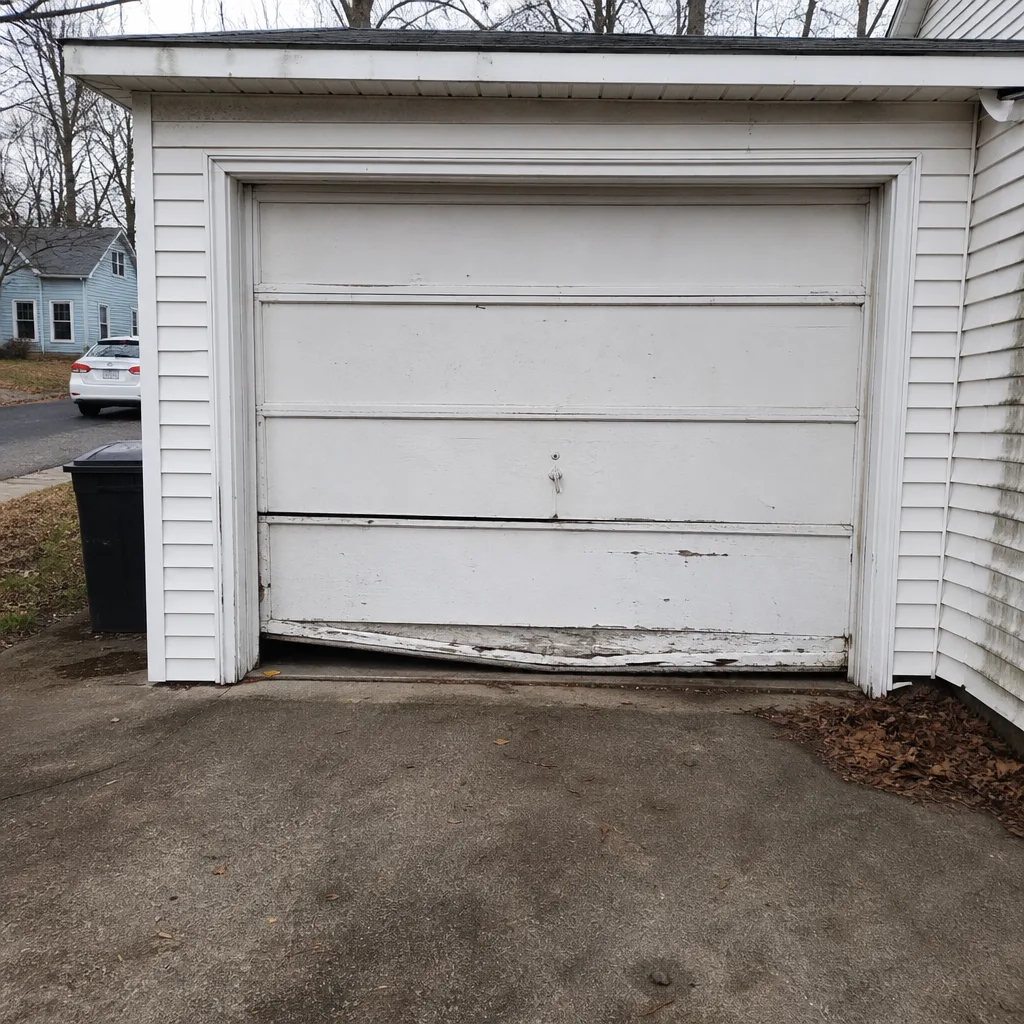 Before
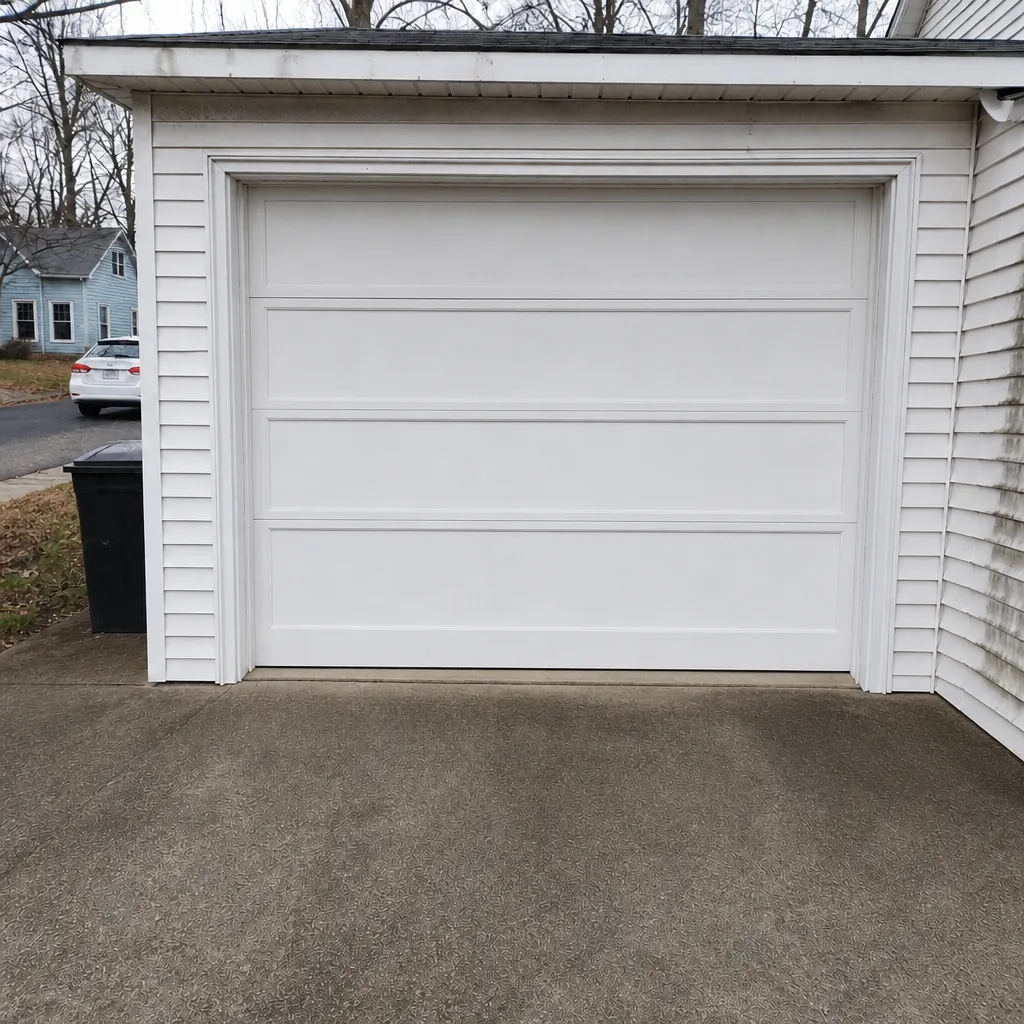 After
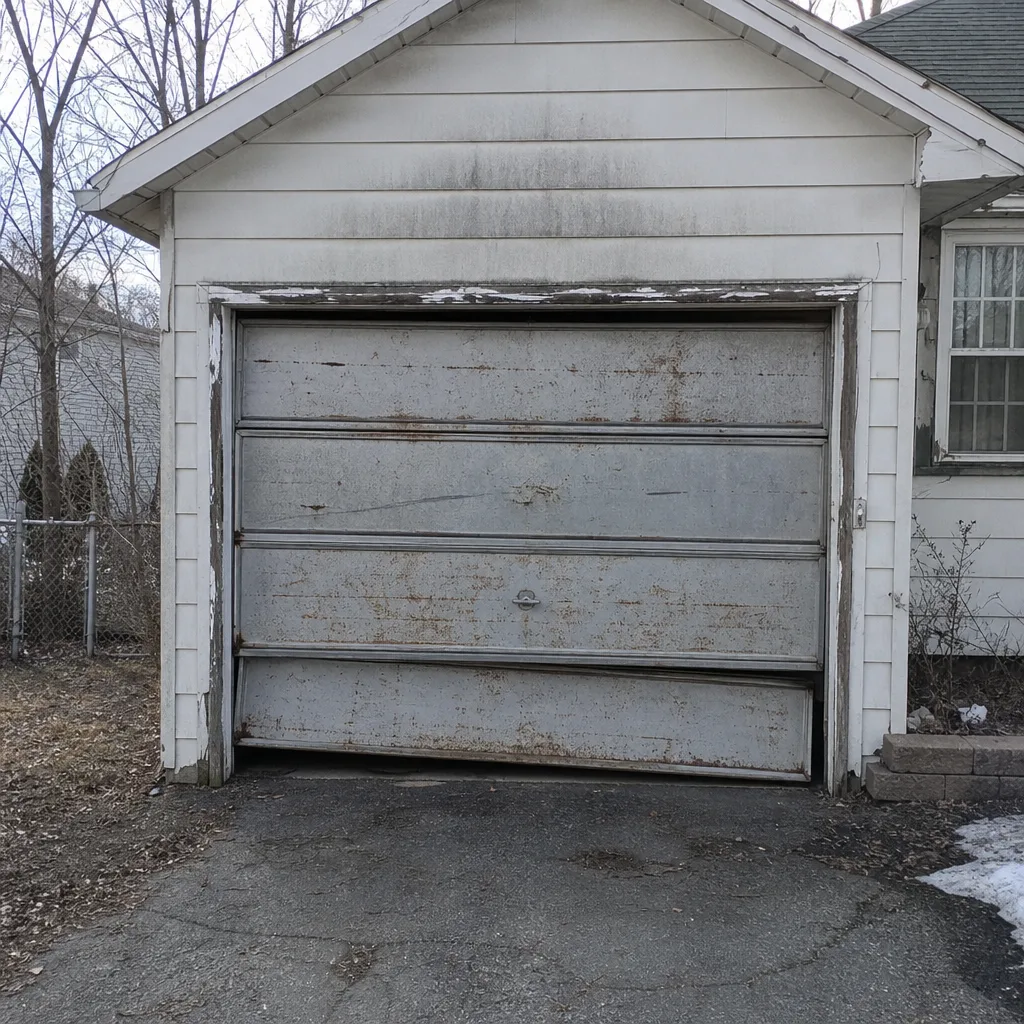 Before
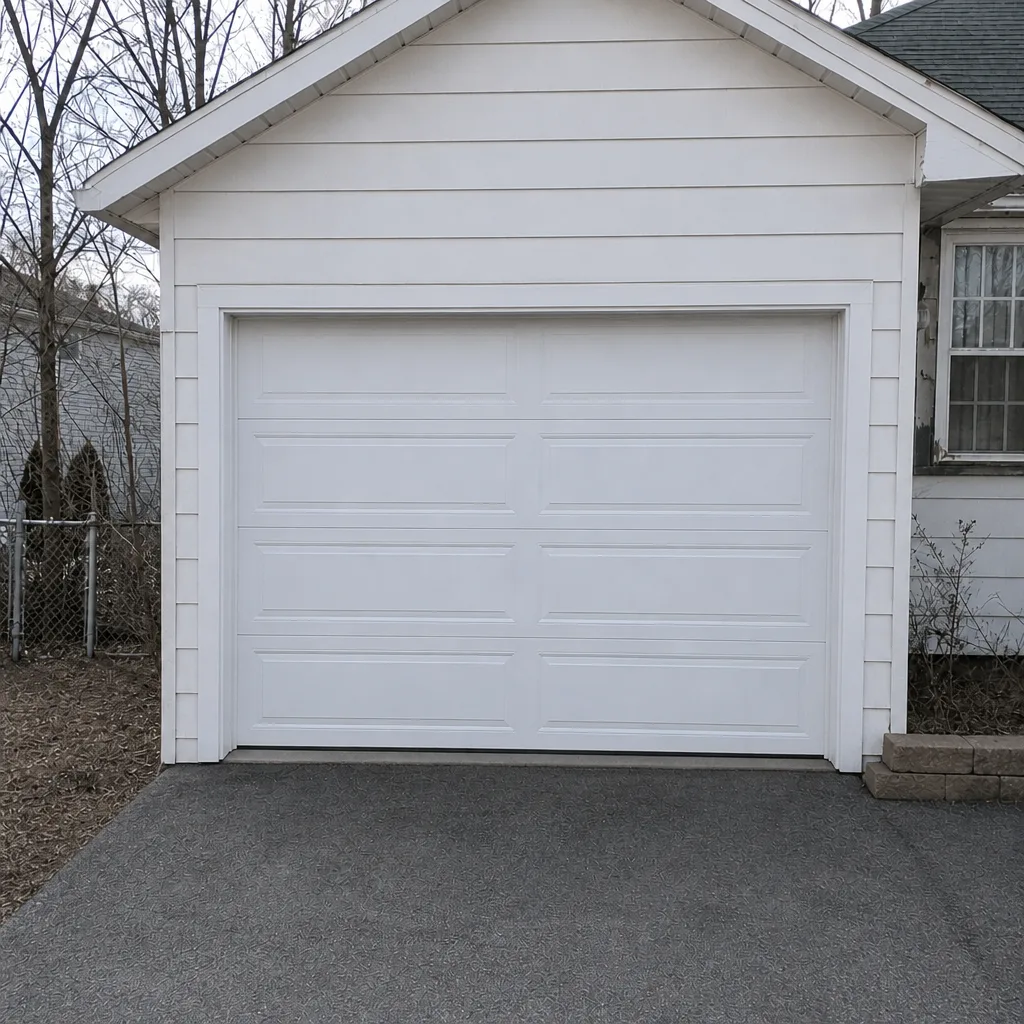 After
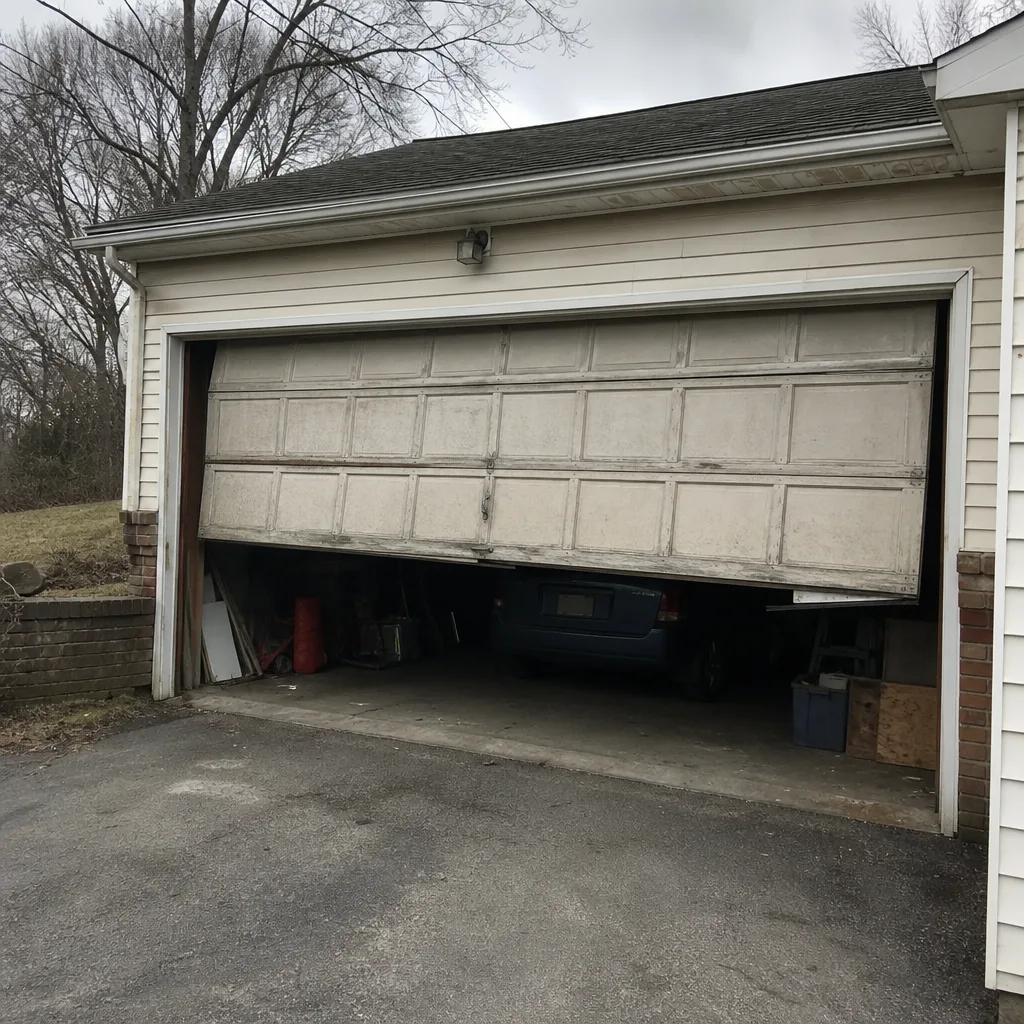 Before
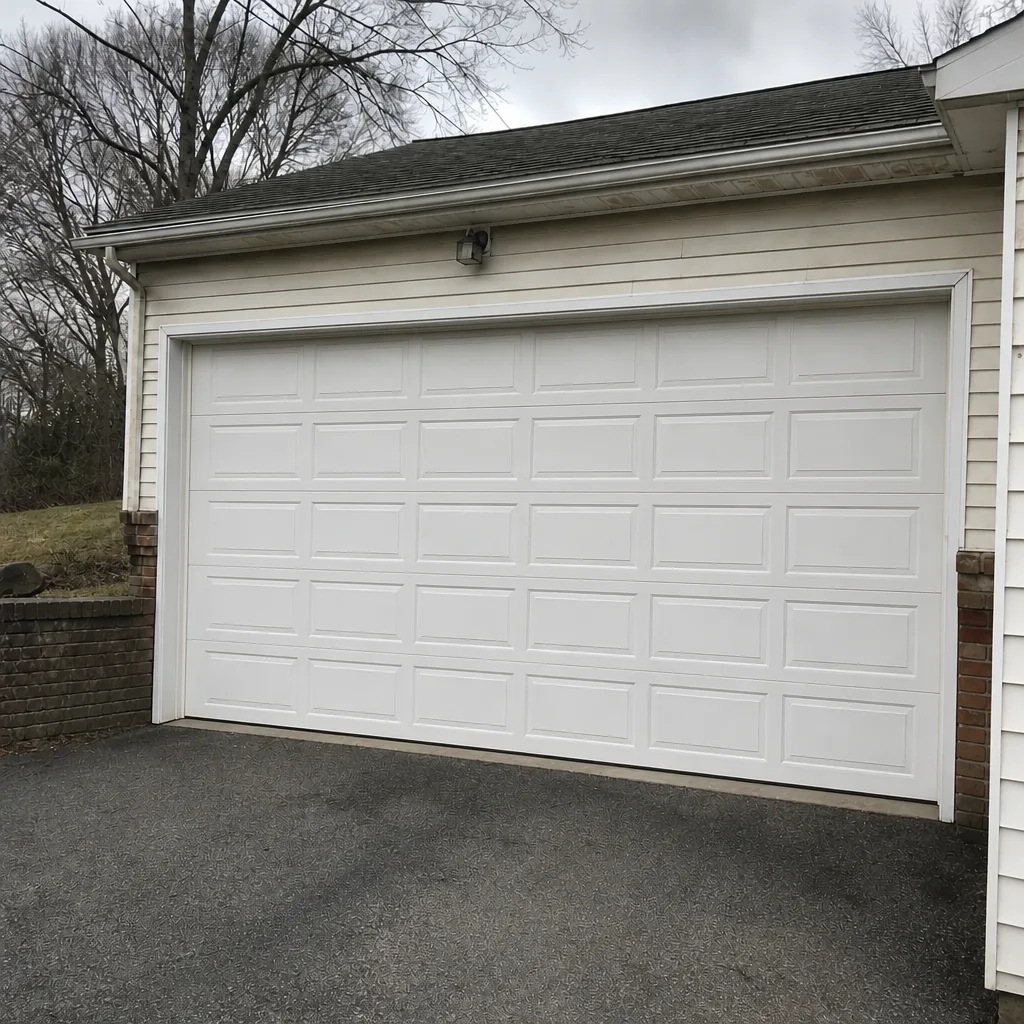 After
When to Call a Professional
Some seasonal tasks are homeowner work, and some are not. Call a professional if the door won’t open or close at all, if you hear a loud snap from the torsion bar, if the door is visibly leaning to one side, if the cables look frayed, or if the opener reverses on its own and adjustment doesn’t fix it. Call if a spring or cable has broken, because there’s no safe way to handle that yourself. Call if the track is bent or out of alignment, if the door is binding in a way that a track clean doesn’t solve, or if the bottom seal needs replacing and the panel around it is showing rust. And if you’re simply not sure what you’re looking at, a trained eye on the door is worth the call. Torrington Garage Door Repair offers free estimates in Torrington, and our technicians have up to 12 years of experience on the full door system. Call (844) 629-7893 to book a visit, and we’ll quote the price before any work starts so there are no surprises.
Frequently Asked Questions
Lubricating the rollers, hinges, and torsion bar bearings with silicone or PTFE spray in early-to-mid October, before the first freeze. That single task prevents the most expensive category of winter failure, because dry metal is what turns a cold morning into a snapped spring. Do it with the right lubricant, not WD-40, and pair it with a bottom seal check.
Because it’s a solvent rather than a lubricant. It dissolves the existing grease and then evaporates, leaving the metal drier than before and more vulnerable to cold-weather stress. Silicone spray and PTFE-based lubricants leave a film that stays put in cold temperatures and doesn’t attract grit.
Get down at floor level and look for cracks, a flattened profile, gaps between the seal and the floor, and rust along the metal edge of the bottom panel. If you see any of those, replace it. It’s a small job in spring that prevents a larger panel repair.
Heat expansion in the steel track. The clearances are tight, and a few millimeters of expansion combined with a slightly misaligned track is enough to cause a bind. It’s usually a professional realignment rather than a lubrication issue.
No. Torsion springs are under enough tension to cause serious injury, and there’s no safe way to work on them without the right tools and training. Spring repair is a job for a dedicated garage door technician, and it’s one of the core services we offer.
We work on the major residential brands, including LiftMaster, Chamberlain, Genie, Clopay, Amarr, Wayne Dalton, Craftsman, and Raynor. If you’re not sure which one you have, the brand name is on the motor housing, and we’ll know the unit before we arrive.
Inspections and repairs are quoted by estimate, and the estimate is free. We give you the written price before any work starts, so the number you agree to is the number on the invoice. Call (844) 629-7893 for an exact quote.
The Bottom Line
Torrington’s four seasons each create a different failure mode, and the homes that avoid expensive repairs are the ones that do the right task at the right time. The fall lubrication pass in early-to-mid October is the highest-value habit, because it prevents the winter failures that cost the most. The winter task is breaking the ice bond gently instead of forcing a frozen door. Spring is for seal inspection and salt cleanup. Summer is for track alignment and heat expansion. And September is for the auto-reverse test before cold weather drifts the settings. None of it is complicated. It just has to happen on the calendar, not the crisis. If you’d like the full seasonal check done properly, Torrington Garage Door Repair covers the entire door system, from springs and cables to panels, tracks, and openers, and we quote the price before any work starts. Call (844) 629-7893 for a free estimate and get the door ready for the season ahead.
Written by the team at Torrington Garage Door Repair.