Last updated November 22, 2026
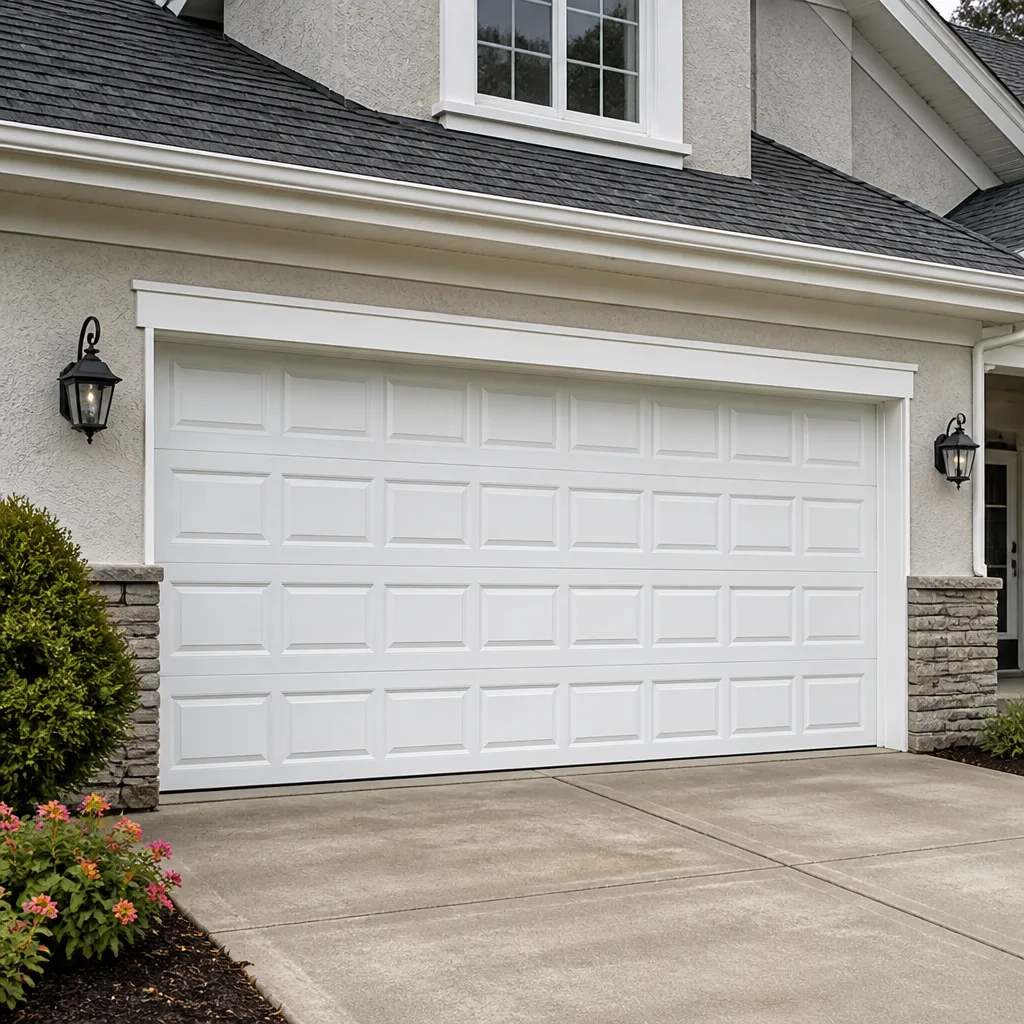 Raised-panel steel
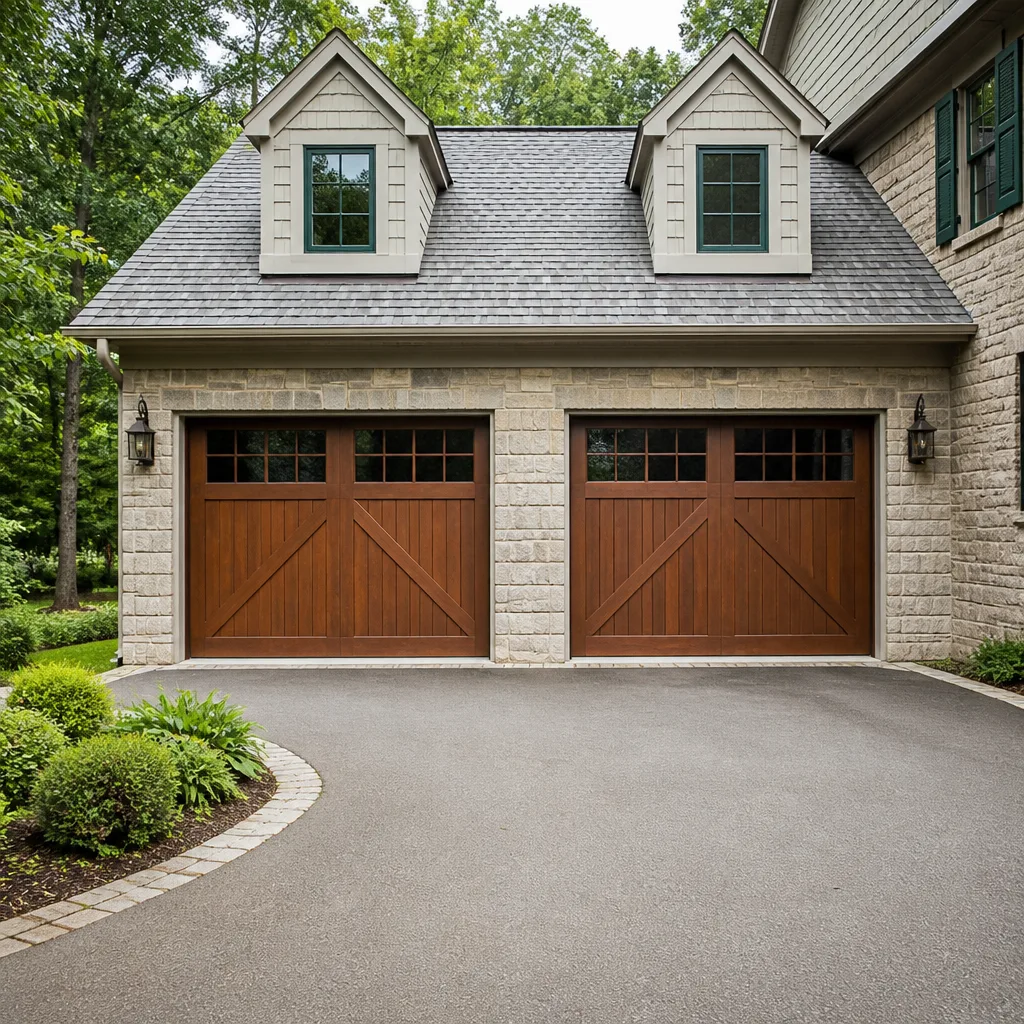 Carriage house
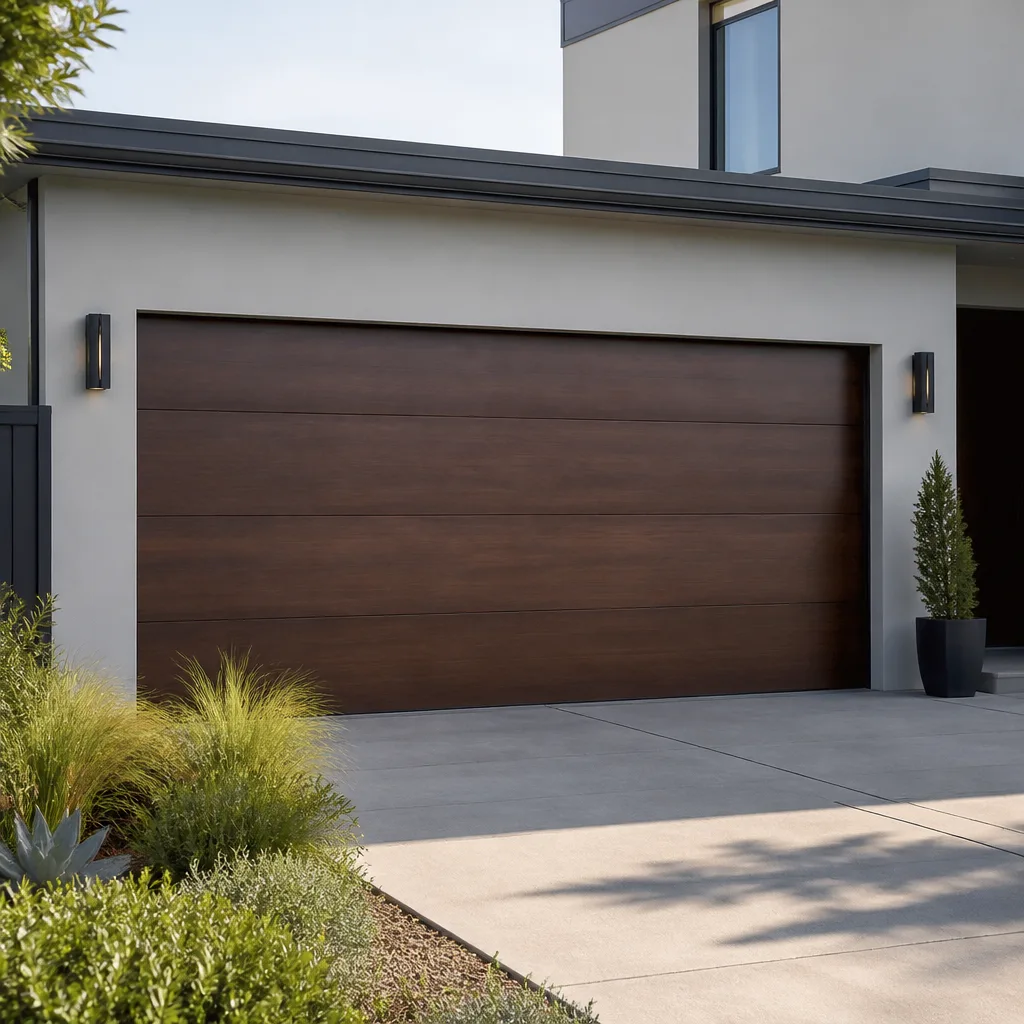 Modern flush
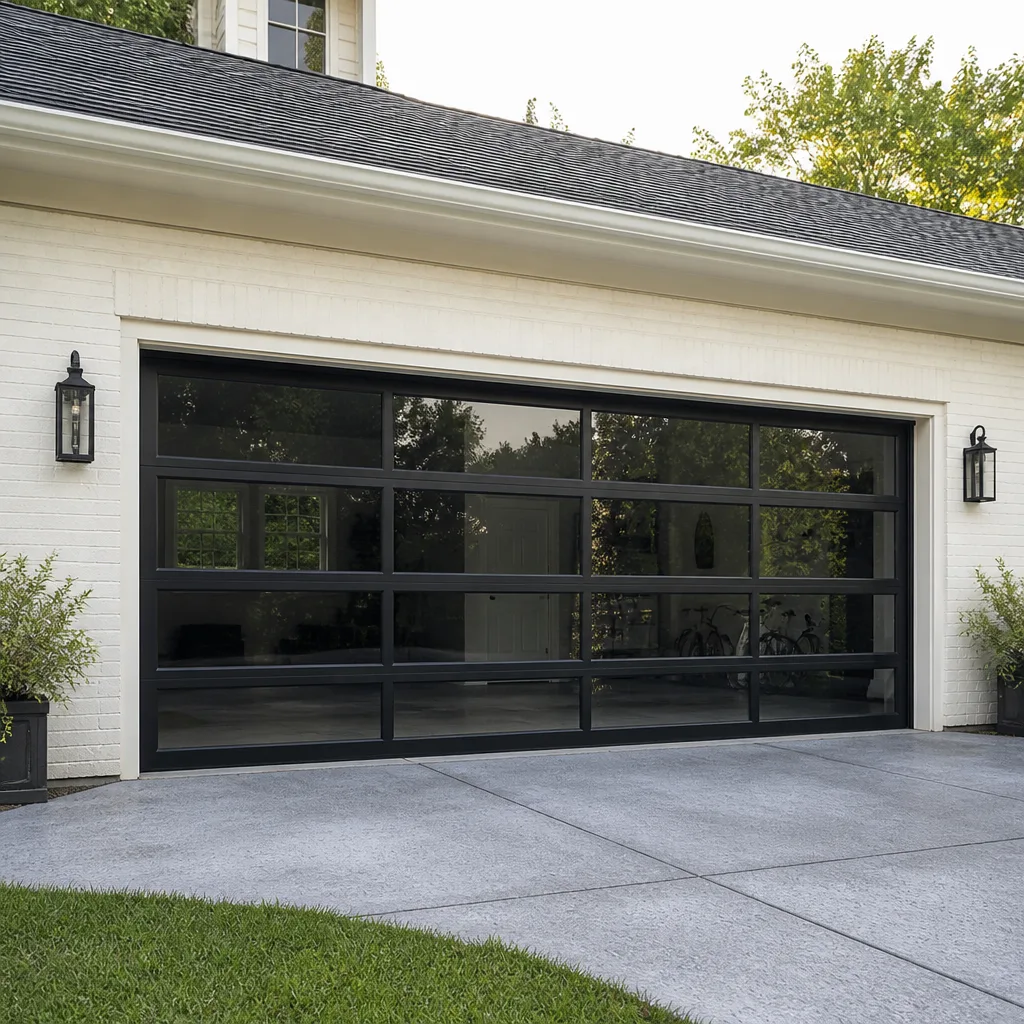 Full-view glass
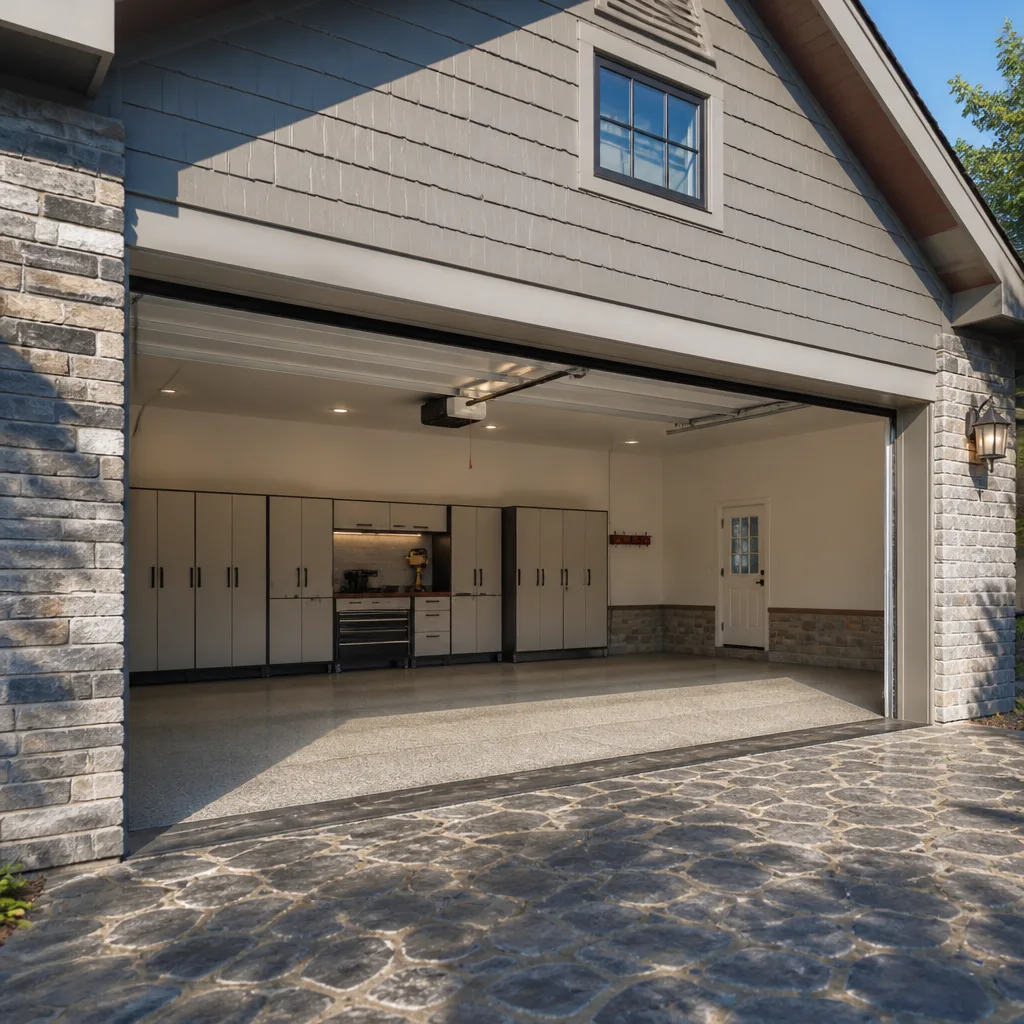 LiftMaster openers
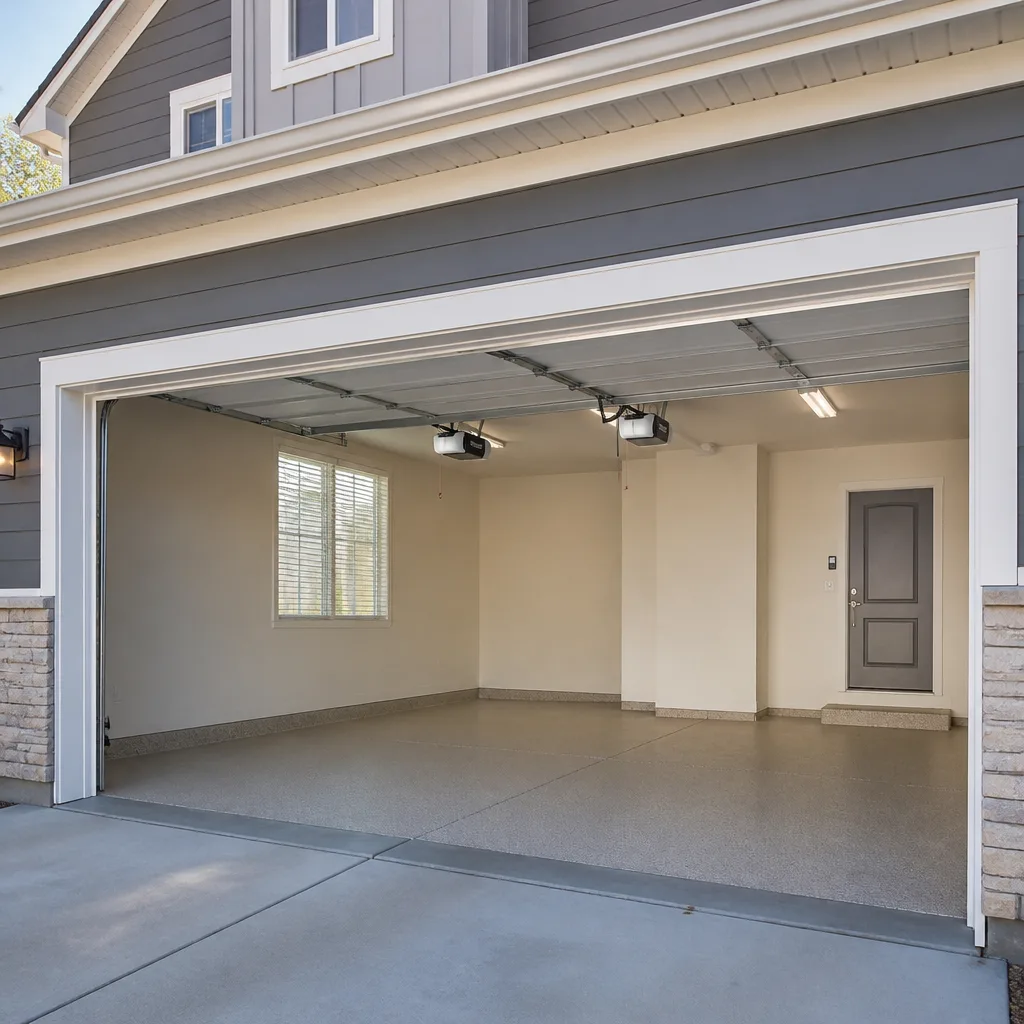 Chamberlain openers
Full 25-point door and opener safety check with every visit - springs, cables, rollers, tracks, and your LiftMaster or Chamberlain opener included
You get a price before we start. It does not change when the pro arrives.
Get your free estimateHow to Hire a Garage Door Contractor in Torrington: A Step-by-Step Guide
Most homeowners hire a garage door contractor the same way they hire a painter: get a couple of prices, pick the middle one, hope for the best. That approach works fine for a coat of paint. It fails badly on a torsion spring. Here’s the uncomfortable truth about the garage door trade in Connecticut: a large share of “garage door repair” jobs get handled by general handymen who own one set of winding bars and learned the rest from videos. Springs store enough energy to cause serious injury, and a handyman who guesses at wire size is guessing with your safety. This guide gives you a concrete way to tell a true specialist apart from a generalist, and to vet a contractor in Torrington before anyone touches your door.
Quick Answer
To hire a garage door contractor in Torrington, verify the contractor’s Connecticut registration and license class through the state’s ELICENSE portal, confirm they handle spring work in-house rather than subcontracting it, ask which brands they service without ordering parts (a specialist should name LiftMaster, Chamberlain, Genie, Clopay, Amarr, Wayne Dalton, Craftsman, and Raynor without hesitation), and insist on a written quote that lists parts by brand and model with labor and warranty spelled out separately. Price matters less than specialization. A licensed, insured, single-trade garage door company that quotes the full job in writing is worth more than the lowest bid from someone who does doors on the side.
Styles & brands we work with
- Raised-panel steel
- Carriage house
- Modern flush
- Full-view glass
- LiftMaster openers
- Chamberlain openers
Table of Contents
- How do you verify a garage door contractor’s license in Connecticut?
- How do you tell a specialist from a generalist?
- Why brand coverage depth matters more than you think
- What should be in a written garage door quote?
- Why multiple quotes on spring work can backfire
- What insurance and liability questions should you ask?
- The questions that separate specialists from generalists
- Red flags in a written quote
How do you verify a garage door contractor’s license in Connecticut?
You verify a garage door contractor in Connecticut by checking their registration and license class on the state’s ELICENSE portal before any work begins. Connecticut regulates home improvement contractors through the Department of Consumer Protection, and garage door installation and repair generally falls under home improvement contractor registration. Some work may require a specific trade license class, and the exact classification depends on the scope of the job. The portal is public, it’s searchable, and it takes about two minutes.
Here’s the process we recommend to any Torrington homeowner:
- Ask the contractor for their Connecticut registration number and the business name exactly as it appears on the registration.
- Open the state’s ELICENSE portal and search by that number or business name.
- Confirm the registration is active, not expired or suspended, and that the name matches the quote you were given.
- Ask which license class applies to your specific job and confirm it covers garage door work.
- Ask for a certificate of insurance and check that the policy is current.
A legitimate contractor will hand this information over without hesitation. Someone who gets defensive about a registration number is telling you something useful. In Torrington, where plenty of homes sit on older lots with detached or oversized garages, the work often involves structural questions (tracks, headers, panel weight) that a properly registered contractor is better positioned to handle. If you’re ever unsure whether the scope of your job crosses into a licensed trade, call the city’s building department and ask. They’d rather answer the question than inspect a problem later.
One clarification that saves people confusion: a contractor’s registration is not the same as being “licensed” in the way an electrician is licensed. Ask both questions. “Are you registered as a home improvement contractor?” and “Is the person doing this work qualified for the specific task?” A good contractor can answer both plainly.
How do you tell a specialist from a generalist?
A specialist talks about your door the way a mechanic talks about your car: in specifics, not generalities. A generalist talks about “fixing the spring” and “getting it working again.” The difference shows up in the first five minutes of the conversation, and it matters most on the repairs that can hurt someone.
Ask any contractor this question before you hire them: “Do you do torsion spring work yourself, or do you bring in someone else?” A true garage door specialist handles spring repair in-house, because it’s a core service, not a referral. A generalist either admits they don’t do springs or says yes too quickly, which is the more worrying answer.
Other signals that separate the two:
- Scope of conversation. A specialist asks about door weight, panel material, opener model, and track condition before quoting. A generalist asks how big the door is and what’s wrong.
- Tool kit. Winding bars, a proper scale for spring wire, and a stock of matched springs are the marks of a specialist. A handyman with a single set of bars and no scale is not equipped for this.
- Warranty terms. Specialists know what their springs and openers are warranted for and state it in the quote. Generalists often don’t offer a warranty at all because they can’t stand behind the work.
- Full-system view. A specialist treats the door and opener as one system and can service both from a single call. A generalist usually fixes one and refers the other.
In our experience, the most reliable test is simply to ask which brands of commercial and residential openers they stock parts for. A generalist will fumble. A specialist will name them. You can read more about what full-system coverage looks like on our Torrington Garage Door Repair page, but the short version is this: one call should cover the door and the opener, or it isn’t really a garage door company.
Why brand coverage depth matters more than you think
Brand coverage is the single most overlooked vetting criterion, and it’s where generalists fall apart quietly. A contractor who “does garage doors” but only knows one or two opener brands will either turn down your job, subcontract it to someone else, or (worst case) order the wrong parts and make the problem worse. A specialist can walk up to a LiftMaster, a Chamberlain, a Genie, or a Wayne Dalton system and already know how it’s built.
When you’re interviewing contractors in Torrington, ask this directly: “Which brands do you service routinely, and which ones would you need to bring someone in for?” Listen for a specific list. A specialist will rattle off the major names without thinking. A generalist will hedge.
At Torrington Garage Door Repair, we’re factory-familiar with eight of the most common residential garage door and opener brands: LiftMaster, Chamberlain, Genie, Clopay, Amarr, Wayne Dalton, Craftsman, and Raynor. That means when a technician arrives at your home, they’re not learning your system on your dime. That’s a specific point to weigh when comparing companies, and it’s the kind of specificity a generalist can’t fake.
Why it matters in practice: each of these brands has different opener logic boards, sensor setups, spring configurations, and panel systems. A Clopay door and a Raynor door don’t troubleshoot the same way. An opener manufactured by Genie and one by Chamberlain use different safety reverse mechanisms. When a contractor only knows one brand deeply and meets another, the job turns into research. When they know the family, the repair is routine.
For the brand-specific repairs most homeowners in Torrington need, our garage door repair service covers the door structure, and our garage door opener repair service handles the mechanism. One company, both ends of the system.
What should be in a written garage door quote?
A written garage door quote in Connecticut should include the parts by brand and model, the labor broken out as a line item, the warranty terms on both parts and labor, and the total. Anything less is a verbal estimate with a number on it, and verbal numbers tend to grow once the door comes apart.
Here’s the specific checklist to hold any contractor to:
- Part brands and model numbers. “Replacement spring” is not enough. You want the wire gauge, the inside diameter, and the length, or the opener model number.
- Labor as its own line. A single all-in number hides where the cost lives. Ask for labor separately so you can compare apples to apples.
- Warranty terms. What’s covered, for how long, and whether the warranty follows the part or the job. Ask about both.
- What’s explicitly not included. A good quote tells you what it doesn’t cover (a damaged track, a failing opener, a panel replacement) so there are no surprises.
- Whether the price is firm or an estimate. Confirm this in writing. Be suspicious of a quote that’s “roughly” anything.
The single most important line in any garage door quote is this: the written price is the price. The price gets quoted and agreed before any work starts. If a contractor discovers something the quote didn’t account for, they should stop, explain it, and get your approval for any change in price before continuing. Not after. In our experience, most disputes between homeowners and garage door contractors come down to a verbal agreement that shifted once the door was apart.
When you get a quote from us or anyone else in Torrington, ask one more question: “Will the price change once you see it?” The answer should be no, or it should be “only if we find something and you approve it first.” That answer is worth more than saving twenty dollars on the labor line.
Why multiple quotes on spring work can backfire
Here’s the counterintuitive part. For most home repairs, getting three quotes is smart. For torsion spring work, it can actually make things worse, and the reason is technical. You need to understand it before you shop.
A torsion spring’s job is to lift the door. The right spring for your door depends on the door’s weight and the drum configuration. Springs are specified by wire diameter, inside diameter, and length. Two contractors can look at the same door and spec two different springs. Both will technically lift the door. Only one will match correctly for cycle life and system balance.
What happens in a typical “three quotes” situation:
- Contractor A specs a spring correctly for your door’s weight.
- Contractor B specs a lighter spring because it’s cheaper.
- Contractor C specs a heavier spring to “make sure it lasts.”
- You pick the cheapest quote, which may have the wrong spring.
- The door is out of balance, the opener works harder, and something fails prematurely.
The better approach on spring work is not to compare price first. Compare specification. Ask each contractor for the spring’s wire gauge and inside diameter, and see if the answers match. If two contractors spec noticeably different springs for the same door, ask why. A specialist can explain the reasoning. A generalist usually can’t. The written quote protects you here: the spring spec is on the page, and if it isn’t, you can ask for it.
This is a big part of why we treat garage door spring repair as a core service and not a referral. Springs are safety-critical equipment, and getting them right means matching the spring to the door, not matching it to the fastest available part. Torrington homes are a mix of older construction and newer builds, and the door weights that come with those vary considerably. Spring sizing isn’t a guess.
What insurance and liability questions should you ask?
Ask any garage door contractor for a current certificate of insurance before work starts, and check that both general liability and workers’ compensation coverage are in place. General liability covers damage to your property. Workers’ comp covers injuries to the people doing the work. If someone gets hurt on your property and the contractor isn’t covered, the exposure can land on you.
Three questions to ask in writing:
- “Can you send a current certificate of insurance showing general liability and workers’ compensation coverage?”
- “Will the person doing the work be an employee of your company or a subcontractor?”
- “If a subcontractor is involved, are they also insured and registered?”
The subcontractor question matters. Some companies present themselves as specialists but hand off spring work or opener installs to another outfit. That other outfit’s insurance doesn’t automatically cover your job. Ask, and get the answer before you agree to a price.
Also ask about licensing. The company you hire should be registered in Connecticut as required, and the person doing the work should be qualified for the specific task. If a contractor can’t tell you their registration number and license class up front, that’s your answer.
For Torrington homeowners, this issue comes up often enough that it’s worth making a habit of. Ask for the certificate. A legitimate contractor hands it over without a fuss, and you’ll know quickly which kind of company you’re dealing with.
The questions that separate specialists from generalists
Bring this exact list to your first call. It takes five minutes, and it makes the decision easy.
- “Which brands do you service routinely?” Listen for a specific list. A specialist names LiftMaster, Chamberlain, Genie, Clopay, Amarr, Wayne Dalton, Craftsman, and Raynor without pausing.
- “Do you do spring work yourself?” The right answer is yes, in-house. If the answer is “we bring someone in,” that’s a generalist with a referral network.
- “Do you handle the opener and the door?” One company, both systems. If they only fix openers or only fix doors, you’re looking at two calls.
- “Can you send me a written quote with parts and labor broken out?” A specialist does this without being asked twice. A generalist resists.
- “Will the price change once you see it?” The answer should be no, or “only with your approval after we show you the issue.”
- “What warranty do you offer on parts and labor?” Vague answers are a red flag. The warranty terms should be in the quote.
- “Do you offer emergency service, and how does it work?” Garage doors fail at the worst times, and a door that won’t close means your home has an open doorway. Ask what emergency service actually means, not just whether they have it.
Our technicians have up to 12 years of experience, and every job we do is a garage door job. That last part shows up in how fast a technician can name your system and what it needs. A generalist spends the first half hour figuring out what they’re looking at. A specialist walked in knowing.
Red flags in a written quote
The written quote is where the careful vetting happens, because a quote reveals more than a conversation. Here’s what to look for:
- Vague labor line items. “Labor: $250” with no description of what’s being done means you have no way to compare or push back. Ask for the labor described by task.
- No brand callouts on parts. A spring, opener, or roller should have a brand or model. “Replacement roller” tells you nothing about what’s going on your door.
- Missing warranty terms. No warranty language is a red flag on its own. If the contractor won’t stand behind the work, the work probably isn’t good.
- Prices that don’t add up to the total. If the line items sum to one number and the total is higher, ask why. A quote that doesn’t reconcile is a quote that will grow.
- No scope exclusions. A good quote tells you what isn’t included. A quote that claims to cover everything is usually a quote that covers less.
- Pressure to book today. Urgency is fine when your door is actually broken and a specialist is scheduling to help. Urgency designed to prevent you from getting a second quote is a sales tactic, not a service.
- No written pricing promise. Ask the contractor to state in writing that the quoted price is the price, subject only to changes you approve after seeing the issue.
In Torrington, one more red flag comes up: a quote that doesn’t say who’s doing the work. If the contractor is vague about whether the person showing up is an employee or a subcontractor, ask. It affects both the quality and the insurance picture.
Common Mistakes to Avoid
- Hiring on price alone for spring work. Two springs can look identical and function differently because of wire diameter. The cheapest spring often isn’t sized right for your door, and it can wear out fast on a door that’s used daily.
- Skipping the ELICENSE check. A quick search on Connecticut’s ELICENSE portal takes two minutes. Not doing it can take a lot longer to unwind.
- Accepting a verbal estimate for a spring. Get the spring spec and the price in writing before anyone starts. Verbal numbers drift once the door is apart.
- Assuming the opener and the door are separate repairs. They’re one system. A contractor who quotes the opener without checking the door’s balance is doing half the troubleshooting.
- Letting urgency skip the vetting. A door that won’t close is a security problem, and it’s tempting to take the first person who picks up. Even then, ask for the registration number and the written quote. It takes minutes.
- Not asking who’s doing the work. Some companies subcontract out the specialty parts of the job. The person doing the work matters, and so does their insurance.
- Ignoring the brand question. If a contractor can’t name the brands they service, they probably can’t service yours. Ask before they arrive.
See the difference
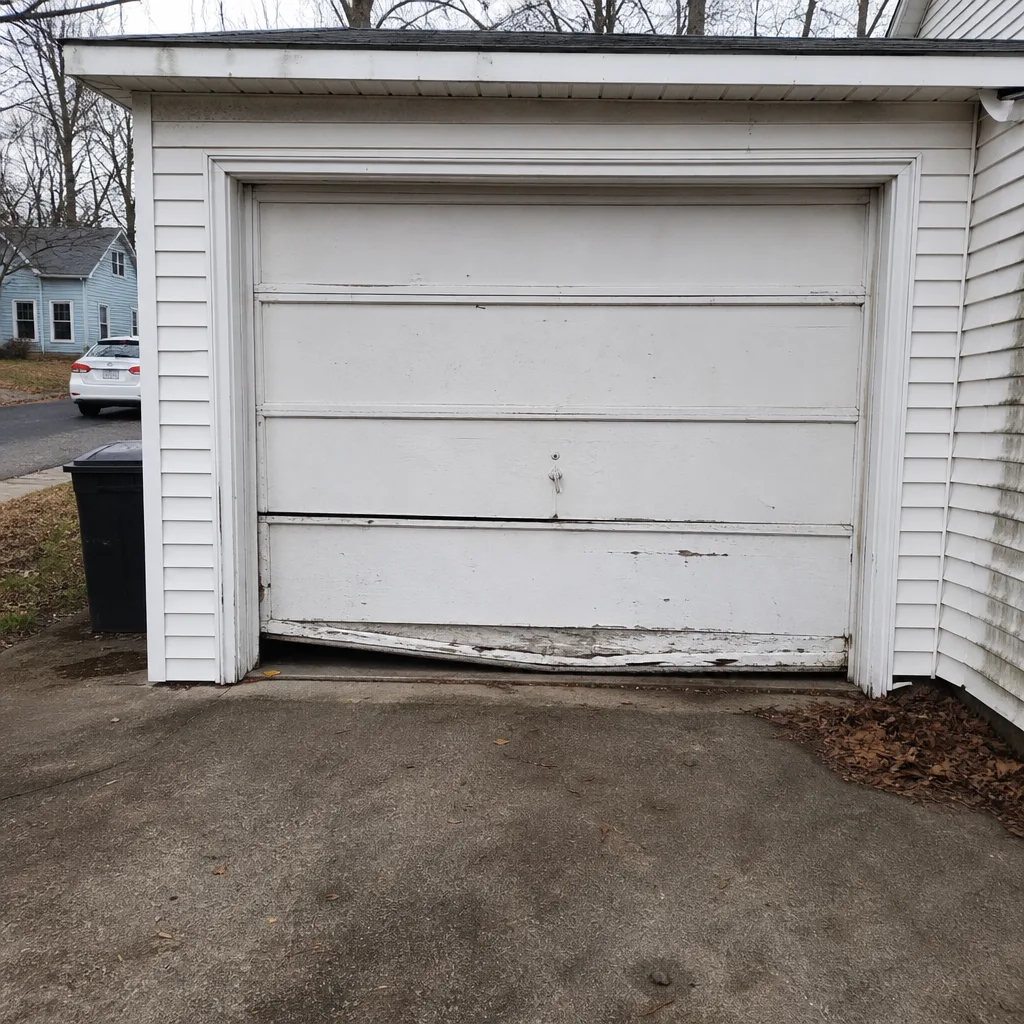 Before
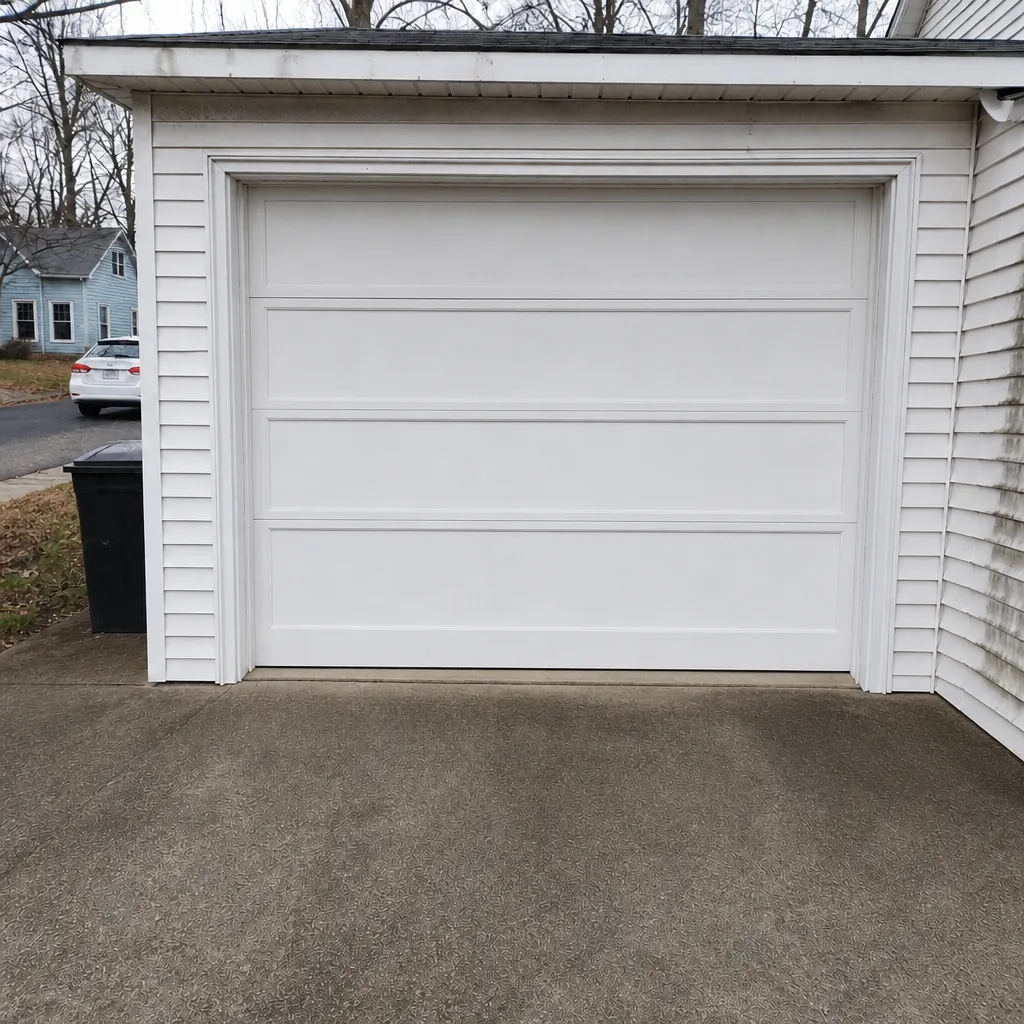 After
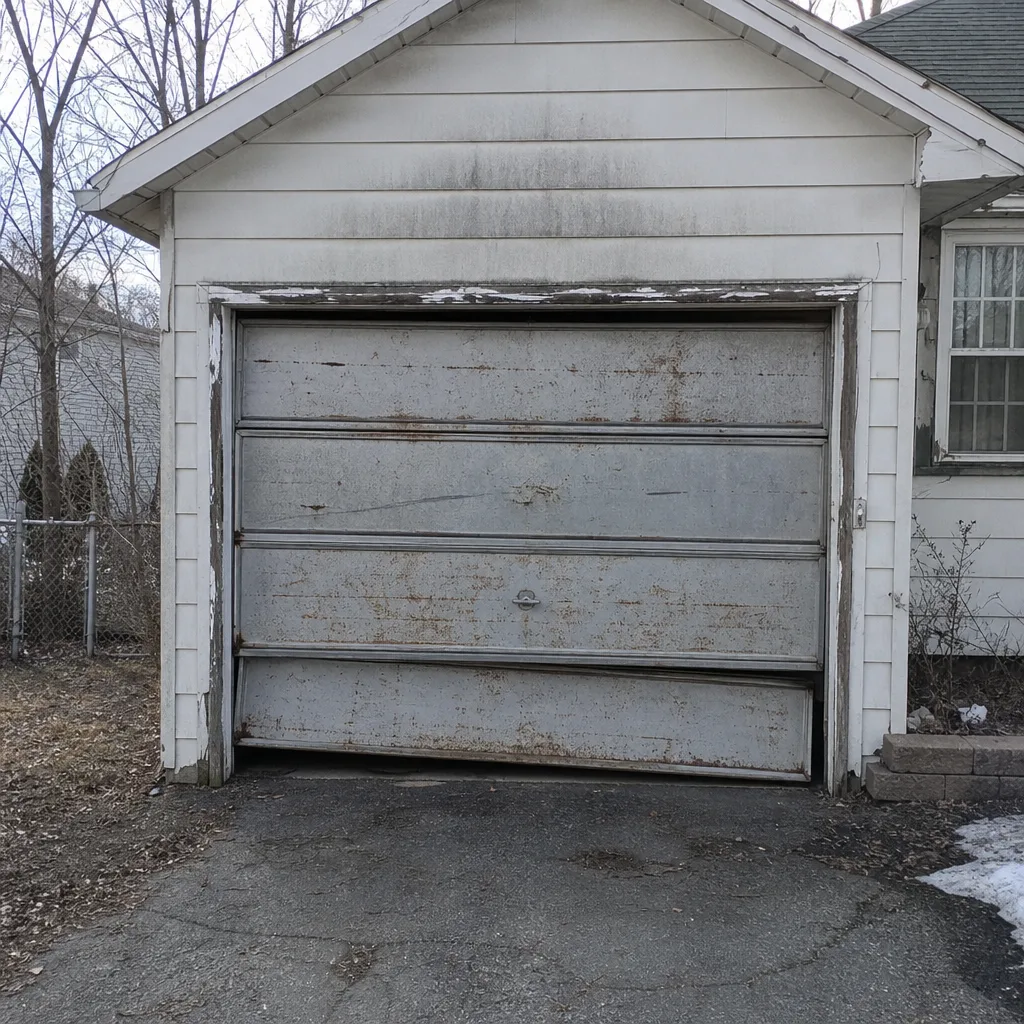 Before
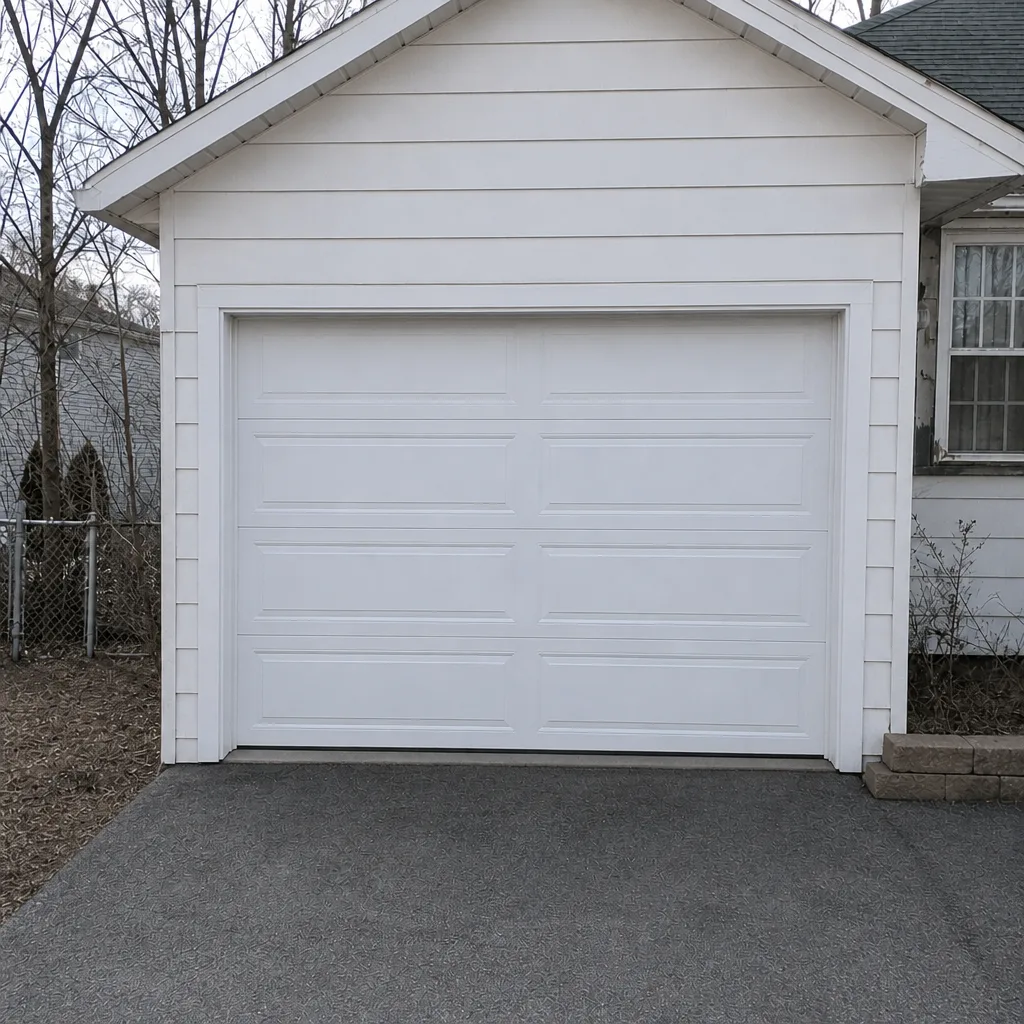 After
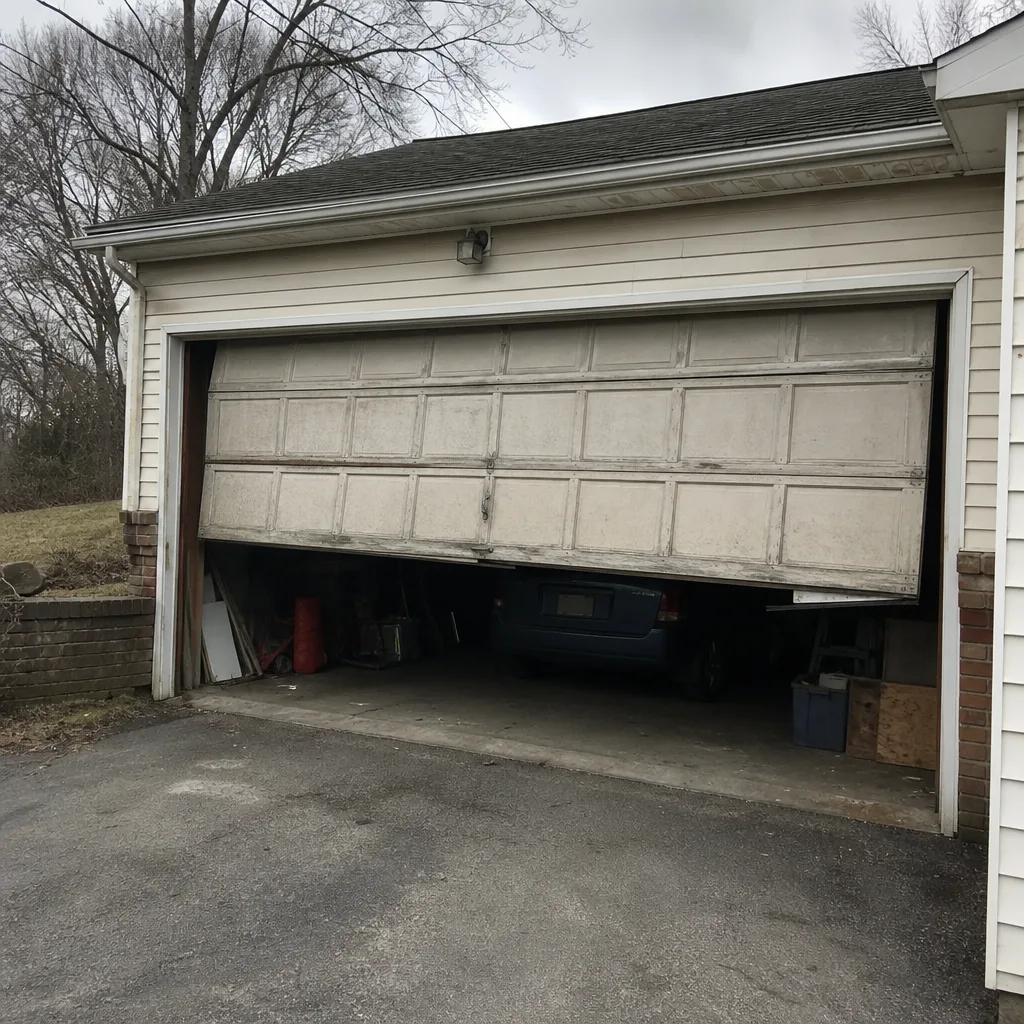 Before
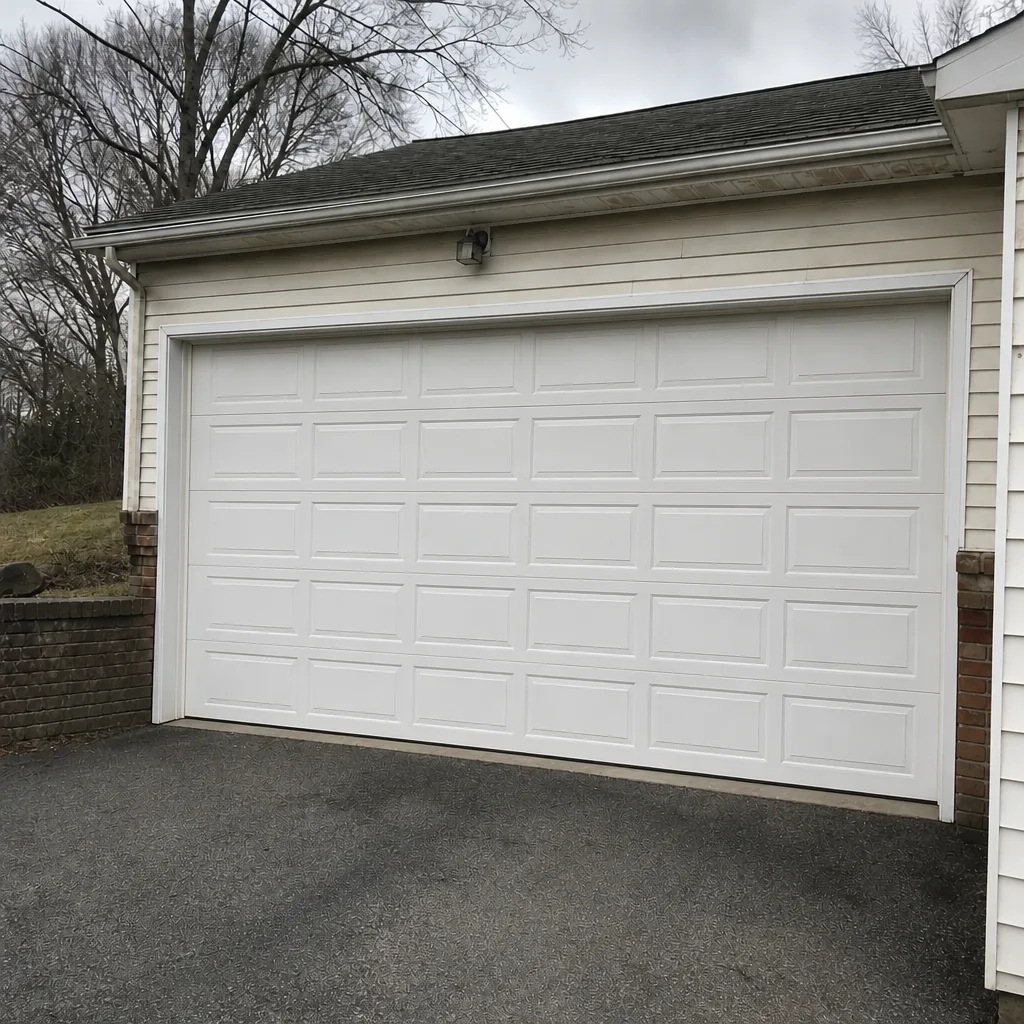 After
When to Call a Professional
Call a professional garage door contractor when the door won’t close all the way, when you hear a loud snap from the spring area, when the door feels unusually heavy to lift, or when the opener runs but the door doesn’t move. A broken torsion spring is a serious safety hazard because the spring holds stored energy, and a door that isn’t balanced can drop. We don’t recommend trying to wind, unwind, or adjust springs yourself; this is exactly the situation where a trained technician earns their fee. Also call a professional for a door that comes off its tracks, an opener that reverses for no reason, or a garage that takes on water because the door doesn’t seal. Torrington Garage Door Repair offers free estimates in Torrington – call (844) 629-7893. Emergency service is a standard offering, not an upsell, so a door that fails at an inconvenient time gets handled like a real problem.
Frequently Asked Questions
It depends on the job. A spring repair is priced differently from an opener replacement, and an installation is priced differently from both. Most contractors in the Torrington market quote per job after seeing the door. The most useful thing you can do is ask for a written quote with parts and labor broken out, and confirm in writing that the quoted price is the price. Call (844) 629-7893 for an exact quote; estimates are free.
Yes. Garage door installation and repair generally falls under home improvement contractor registration in Connecticut, and some work may require a specific trade license class depending on scope. Use the state’s ELICENSE portal to verify the registration is active and that the business name matches your quote. Two minutes of checking is worth it. If the scope of your job is unclear, call the city’s building department and ask.
Because contractors can spec different springs for the same door and all of them will technically work. Springs are defined by wire diameter, inside diameter, and length, and the right one depends on your door’s weight. Comparing only price across quotes can lead you to the wrong spring, which puts stress on the opener and the door. Compare spring specifications first, then compare price.
A general handyman can handle minor adjustments on a door that isn’t under spring tension. Spring work is a different matter. Torsion springs store enough energy to cause serious injury if they’re released incorrectly, and the job requires the right tools and the right spring spec. A handyman with one set of winding bars and no scale is not equipped for this. Call a specialist.
A true specialist should be able to work on the major residential brands without subcontracting. Ours includes LiftMaster, Chamberlain, Genie, Clopay, Amarr, Wayne Dalton, Craftsman, and Raynor. If a contractor you’re vetting can’t name the brands they service, that tells you something about their depth. Ask directly and listen for specifics.
A door that won’t close leaves your home open to the weather and to anyone walking by, so it’s treated as urgent. Emergency garage door service is a core offering for us, not an upsell. Call (844) 629-7893 and we’ll work out the earliest available visit and give you a clear price before work starts. The quote is agreed before any work begins.
The Bottom Line
Hiring a garage door contractor in Torrington comes down to verifying a few things before anyone touches your door. Check the contractor’s Connecticut registration through the state’s ELICENSE portal. Confirm they do spring work in-house. Ask which brands they service and listen for a real list. Get a written quote with parts, labor, and warranty terms broken out. And confirm, in writing, that the quoted price is the price. Price matters, but specialization matters more. A licensed, insured, single-trade specialist with the right spring for your door will cost you less in the long run than a generalist who guesses. If you’re not sure where to start, call us at (844) 629-7893 for a free estimate, and we’ll walk you through what your door needs and what it’ll cost.
Written by the team at Torrington Garage Door Repair.